placeWat Phumin
วัดภูมินทร์
Nan — the murals with the tattooed legs in them
 Takeaway · CC BY-SA 3.0
18.7748, 100.7714 · OpenStreetMap
What it is
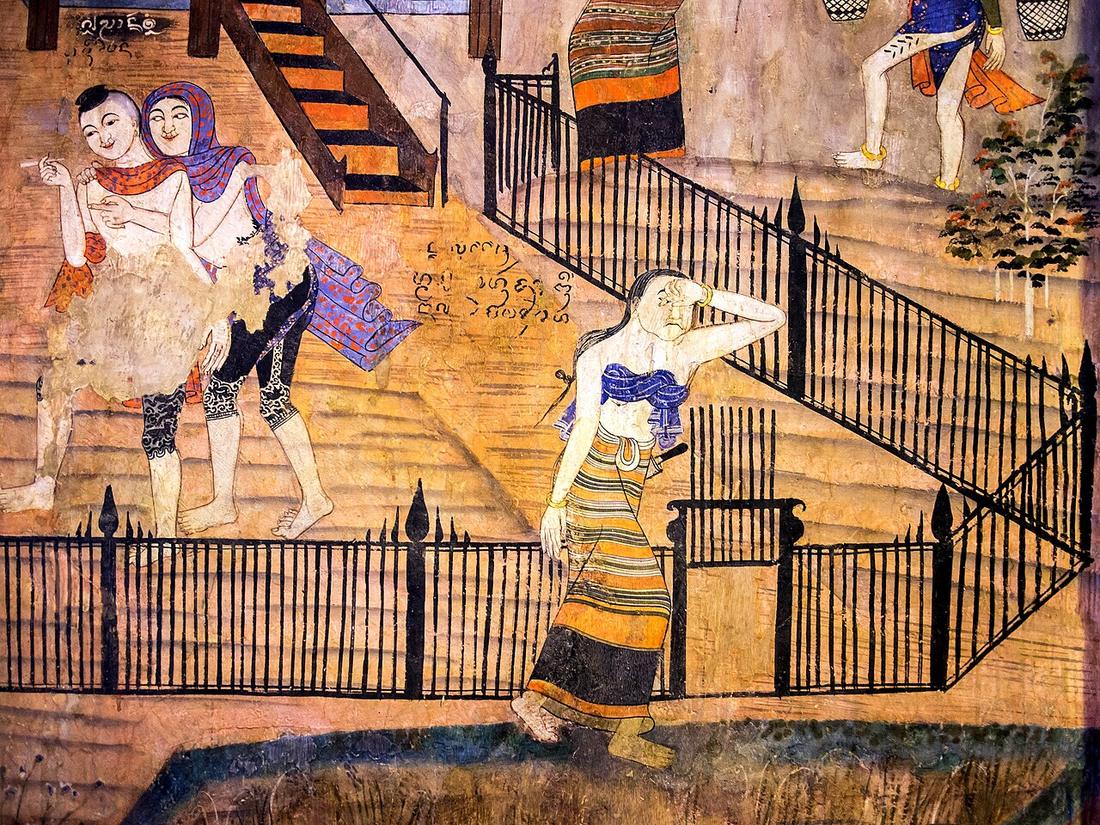
The temple in Nan whose nineteenth-century murals show northern men with their legs and torsos marked.
The long version
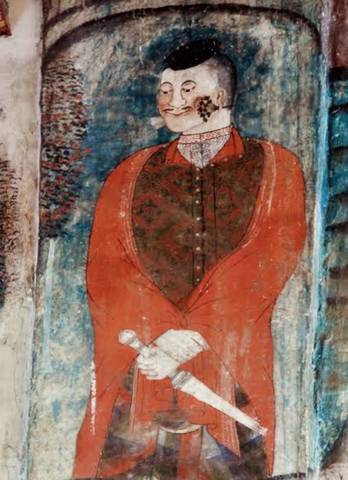
The Lanna volume this site quotes says the evidence for the leg tattoo is in the murals of important temples, and promises examples. Wat Phumin is the best known of them: its wall paintings are the standard illustration of northern dress, northern faces and northern skin.
Inference — a mural is evidence that a painter expected to see marked legs, which is not quite the same as evidence of any particular man's marks. It is strong for pattern and weak for detail, and this site treats it that way.
Connected to
- Sak kha lai What it shows.
- The murals What a painting is evidence of.
Named here by
- The murals The best-known wall.
Where each claim comes from
| Field | Tier | Source | Note |
|---|---|---|---|
| default | cited | อภิมหามนต์คาถา (Supreme Maha Mantra Katha), pp. 19–21 — held and digitised in the wichaa.net manuscript corpus, item 6968 | |
| text_th | inference | written in Thai by this project, not machine-translated |
Sources
- วัดภูมินทร์ — Wikipedia (th)
- Wat Phumin — Wikipedia (en)
- อภิมหามนต์คาถา (Supreme Maha Mantra Katha), pp. 19–21 — held and digitised in the wichaa.net manuscript corpus, item 6968
cited Cited — a named source, linked · harvested Harvested — fetched from an open dataset, with its licence · tradition Tradition — general knowledge of the tradition, hedged · inference Inference — this project's own reasoning from the above · field Field — someone stood there