ธรรมเนียมการสักHtoe kwin
ထိုးကွင်း · Burmese
htó-kwìn — the pricked rings
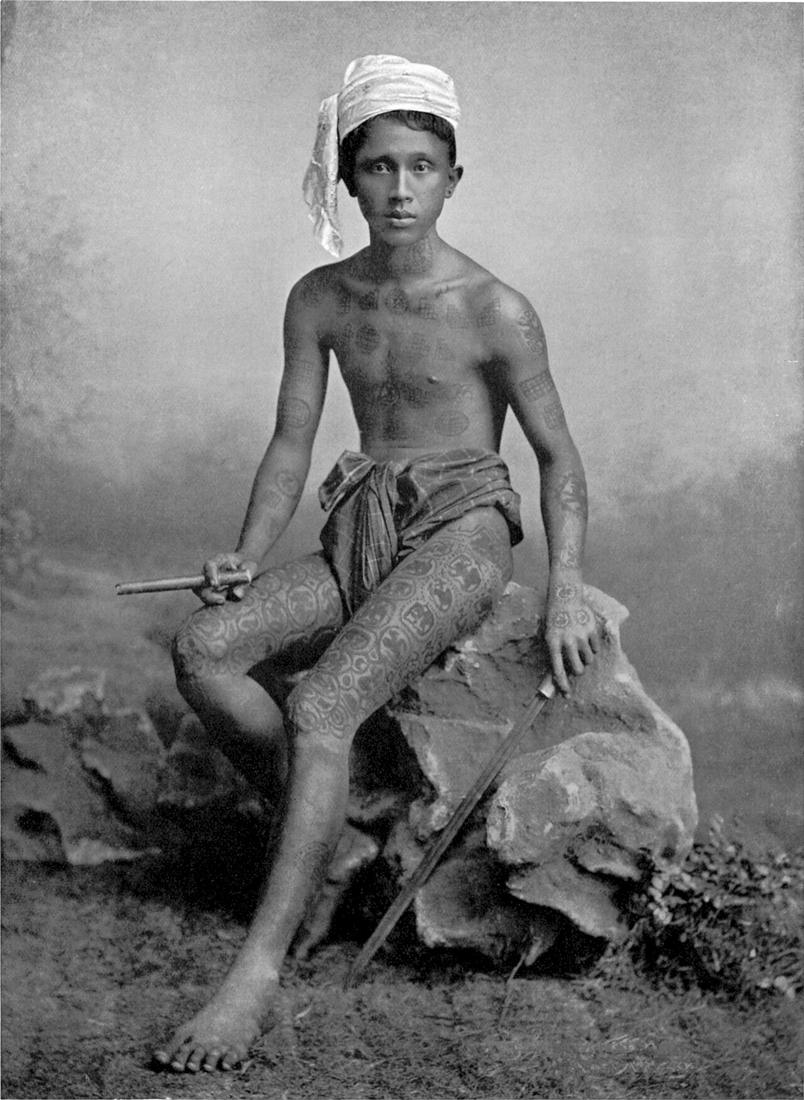 Philip Adolphe Klier · Public domain
| ลงตรงไหน | เอวถึงเข่า, ขา, เข่า, ต้นขา |
|---|---|
| ใช้เวลาเท่าไร | three to six days for the whole; three or four figures at a sitting |
| หยุดเพราะ | no ban — colonial rule and town life, in Shway Yoe's own account and the Wikipedia summary of it |
| หมายเหตุ | Boys of eight to fourteen, waist to just past the kneecap, in framed animals. |
| เครื่องมือ | Hnitkwasok |
| หมึก | เขม่าตะเกียง |
ราว ค.ศ. 1,100 – ค.ศ. 2,026 · Tang-dynasty notice of tattooed Pyu dancers; thinning after 1900, still done
21.9600, 96.0900 · OpenStreetMap
คืออะไร
ชายพม่าหัวเมืองเกือบทุกคนมีลายนี้ สัตว์สีน้ำเงินเข้มเต็มผืนตั้งแต่ระดับสะดือลงไปใต้เข่า เริ่มตั้งแต่ยังเป็นเด็ก
ฉบับยาว
เชวโย นามปากกาของเซอร์เจมส์ จอร์จ สก็อตต์ ผู้ใช้ชีวิตในพม่าและเขียนบันทึกภาษาอังกฤษที่ละเอียดที่สุดไว้ เปิดบทด้วยประโยคตรงๆ ว่า ชายหนุ่มพม่าถือว่าการสักต้นขาสำคัญเท่ากับการบวช และก่อนจะสักเสร็จ ความเป็นชายเต็มตัวของเขายังน่าสงสัย
งานที่เสร็จแล้วกินตั้งแต่แนวสะดือถึงใต้ลูกสะบ้า และเขาเลือกใช้คำเรียกเสื้อผ้าอธิบายมัน ไม่ใช่รอยบนผิวหนังเท่ากับ "กางเกงรัดรูปที่เข้ารูปยิ่งกว่าถุงมือ" ลายเป็นเสือ แมว ลิง ช้าง นัต และบีลู แต่ละตัวมีกรอบตัวอักษรล้อมเป็นวงรี ช่องว่างถมด้วยลายเดียวกัน
กรอบคือจุดสังเกต สัตว์เหล่านี้ไม่ได้ประกอบเป็นภาพเดียว แต่เป็นหน่วยซ้ำๆ เต็มผืน จึงมองไกลๆ แล้วอ่านเป็นผ้า ไม่ใช่ภาพ
ตอนนี้
นักมวยเลธเวยถือลายขาเป็นเครื่องหมายของกีฬา และบทความวิกิพีเดียบันทึกคำของนักมวยว่าการสักทั้งสองขาใช้เวลาถึง 24 ชั่วโมง และต้องทนโดยไม่แสดงออก นอกสังเวียน ธรรมเนียมนี้เหลือน้อยลงมาก
หมายเหตุ
Shway Yoe reports and then refuses a claim: that the custom began for a "shameful reason assigned by foreign writers." He does not repeat the reason and says no Burman believes it. This site does the same.
เกี่ยวข้องกับ
- สักขาลาย The same garment of skin, one border east, and far less written down.
- Hnitkwasok The two-foot brass pricker that made it.
- การสักของไทใหญ่ Who Shway Yoe says did the charm work, and did more of it.
- Shway Yoe Who wrote it down, and what that costs the record.
- The tattoo is clothing "A skin-tight pair of caleçons" — one of the three.
- ชาด The other colour: charms, in red, which fade.
ถูกอ้างถึงโดย
- Chin facial tattooing The other Burmese tradition, and the one that was not banned.
- สักขาลาย The same garment of skin, one border west. The Burmese work is the better recorded of the two.
- การสักของไทใหญ่ Who they learned it from, if Milne is right — and she hedges.
- The design block The sample book, 1882.
- Hnitkwasok What it makes.
- เขม่าตะเกียง What it drew.
- Cats and monkeys The tradition it belongs to.
- The framed animal The tradition it belongs to.
- Bearing it Where the opium comes in.
- When it is done Stacked with ordination.
- Saya Chein His work.
- Shway Yoe What he described.
- Mandalay The tradition.
- The tattoo is clothing Caleçons.
- เขตลายขา The Burmese side.
- The sample book The work it was for.
แต่ละข้อความมาจากไหน
| Field | Tier | Source | Note |
|---|---|---|---|
| default | cited | The Burman: His Life and Notions — scanned by the Internet Archive | |
| text.today | cited | Tattooing in Myanmar — Wikipedia (en) | |
| text.story | cited | The Burman: His Life and Notions — scanned by the Internet Archive | |
| text_th | inference | written in Thai by this project, not machine-translated |
แหล่งอ้างอิง
- The Burman: His Life and Notions — scanned by the Internet Archive
- Tattooing in Myanmar — Wikipedia (en)
- Gazetteer of Upper Burma and the Shan States, Part II — scanned by the Internet Archive
- Shans at Home — scanned by the Internet Archive
cited Cited — a named source, linked · harvested Harvested — fetched from an open dataset, with its licence · tradition Tradition — general knowledge of the tradition, hedged · inference Inference — this project's own reasoning from the above · field Field — someone stood there