instrumentUhi
uhi · Māori
An albatross-bone chisel, struck
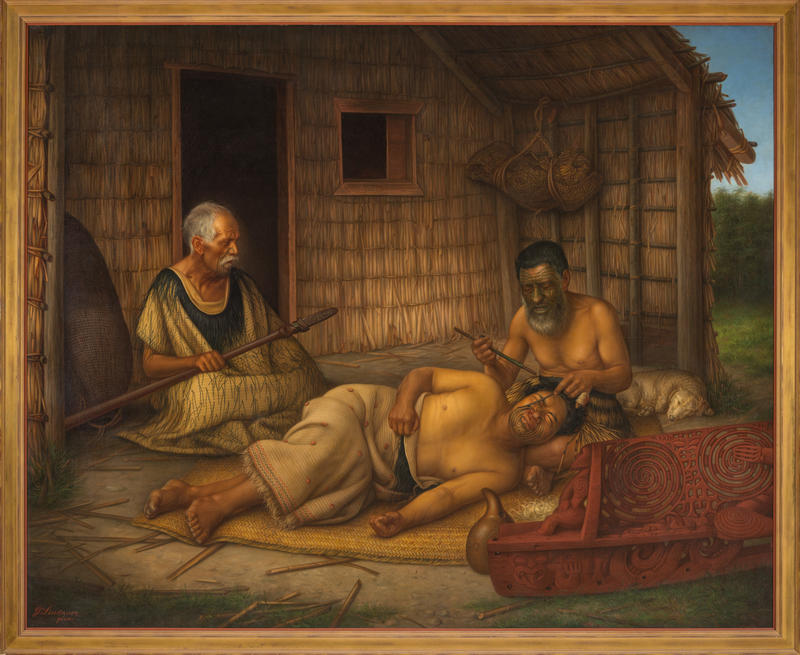 Gottfried Lindauer · Public domain
struckworked
2hands
| Made of | albatross bone, bone |
|---|---|
| Points | a straight or toothed cutting edge |
| Held | the tohunga-tā-moko holds the uhi and the mallet |
What it is
A chisel of albatross bone hafted to a handle and struck with a mallet, cutting a groove that the pigment fills.
The long version
Pigment lived in carved vessels called oko, buried between uses and passed down the generations. A feeding funnel, the kōrere, was used while a face was healing.
Steel needles replaced the uhi in the late nineteenth century: faster, safer, and smooth. In 2007 it was reported back in use by some practitioners.
Connected to
Named here by
Where each claim comes from
| Field | Tier | Source | Note |
|---|---|---|---|
| default | cited | Tā moko — Wikipedia (en) | |
| text_th | inference | written in Thai by this project, not machine-translated |
Sources
- Tā moko — Wikipedia (en)
cited Cited — a named source, linked · harvested Harvested — fetched from an open dataset, with its licence · tradition Tradition — general knowledge of the tradition, hedged · inference Inference — this project's own reasoning from the above · field Field — someone stood there