traditionShan leg tattooing
การสักของไทใหญ่
တႆး · Shan
Both legs, waist to knee, and further than the Burmese
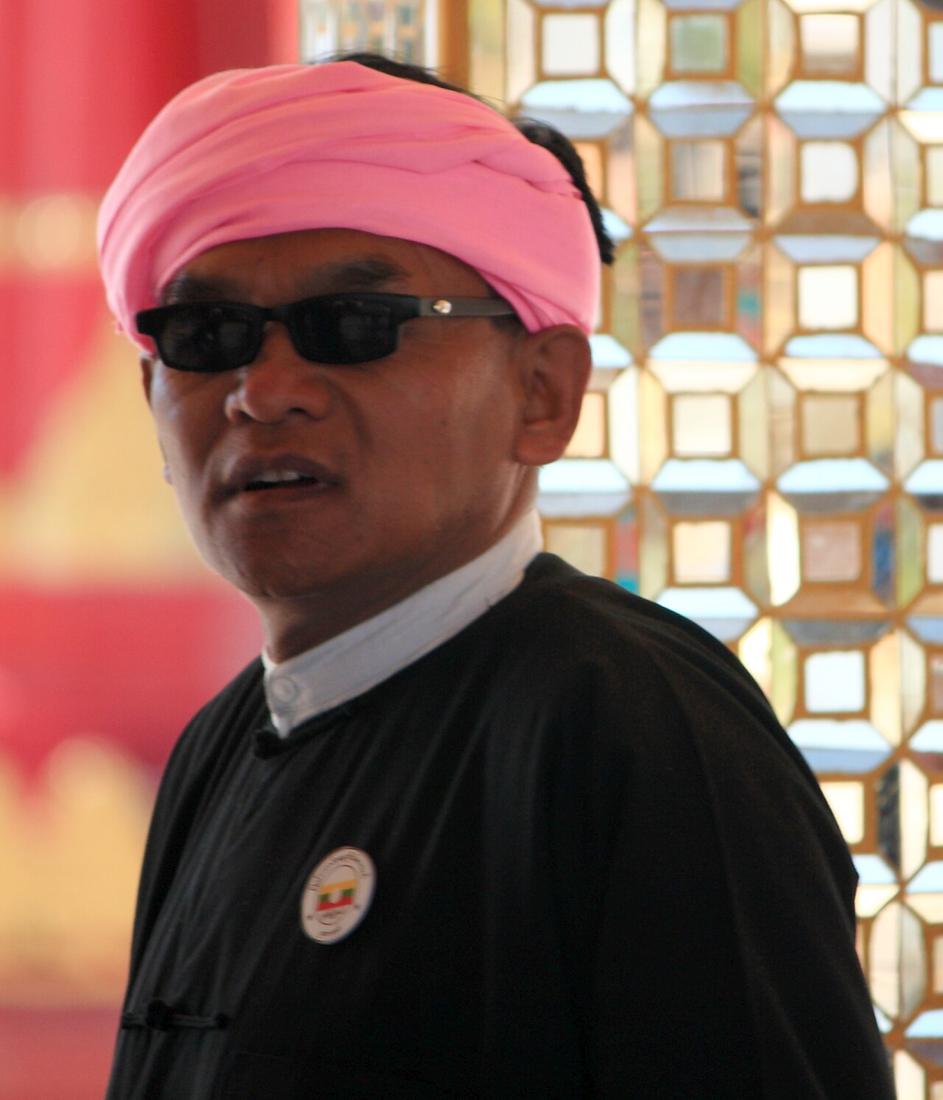 Damien Halleux Radermecker from Brussels, Belgium · CC BY-SA 2.0
| Where it goes | waist to knee, waist to ankle, back, arms, face |
|---|---|
| How long | begun at twelve to fourteen |
| Notes | A Shan boy counted as a child until he was tattooed. |
| Tool | Hnitkwasok |
| Ink | Lampblack |
about 1,300 – 2,026 · Chinese annals notice Shans tattooing their foreheads; Milne describes the leg work in 1910
21.2900, 99.6000 · OpenStreetMap
What it is
The same leg work as the Burmese, carried further — to the ankles, up the back, and on the specialists who tattooed everybody else's charms.
The long version
Leslie Milne lived among the northern Shan and published Shans at Home in 1910. Her sentence on status is the whole of it: a Shan boy is a child until he is tattooed. Plucky boys start at twelve, most wait until fourteen. The rule is both legs, waist to knee, the thighs completely covered in dark blue — and often on to the ankles. Backs come later, in blue or more often red, and without symmetry: a grid of lettered squares under one shoulder blade, small circles or beasts on the other side.
Shway Yoe, writing thirty years earlier, says the Shans tattoo more extensively than the Burmese, with rays running up from the waistline to the chest and nearly to the nape, and that the retainers of a sawbwa — a Shan chief — might be marked everywhere but the palms and the soles.
The second thing he says is the one that matters for the whole region: the men who tattoo charms and cabalistic figures are mostly Shans. They are credited with the special skill, they mutter the spells over the medicine, and they are held in some awe for it. The Lanna volume agrees from the other side of the border: this fashion was widespread among the Burmese and the Tai Yai, who tattoo yantras no less than the Lanna do.
Now
Tai Yai communities span the Myanmar–Thailand border, including Mae Hong Son. This site has no count of who is still tattooed and does not guess at one.
Connected to
- Htoe kwin Who they learned it from, if Milne is right — and she hedges.
- Sak kha lai The same work on the Thai side of the line.
- Sak yant What the Shan specialists were carrying when they crossed.
- Leslie Milne Who wrote it down, and stayed long enough to quote the boys' friends.
- The leg-tattoo zone The zone this belongs to, and where its border runs.
Named here by
- Htoe kwin Who Shway Yoe says did the charm work, and did more of it.
- Sak kha lai And the same again to the north, where the tattooers of charms came from.
- Sak yant Where Shway Yoe says the charm specialists came from.
- Bearing it Where the friends do.
- Ajarn Dang and Ajarn Sak The line they name.
- Leslie Milne What she described.
- Kengtung The tradition.
- The leg-tattoo zone The middle.
Where each claim comes from
| Field | Tier | Source | Note |
|---|---|---|---|
| default | cited | Shans at Home — scanned by the Internet Archive | |
| text_th | inference | written in Thai by this project, not machine-translated |
Sources
- Shans at Home — scanned by the Internet Archive
- The Burman: His Life and Notions — scanned by the Internet Archive
- Gazetteer of Upper Burma and the Shan States, Part II — scanned by the Internet Archive
- อภิมหามนต์คาถา (Supreme Maha Mantra Katha), pp. 19–21 — held and digitised in the wichaa.net manuscript corpus, item 6968
cited Cited — a named source, linked · harvested Harvested — fetched from an open dataset, with its licence · tradition Tradition — general knowledge of the tradition, hedged · inference Inference — this project's own reasoning from the above · field Field — someone stood there