Pinot CountryVineyard and cellar (11)
Whole cluster, cold soak, punch-down, neutral oak, the decisions that show up in the glass.
In barrel (1)
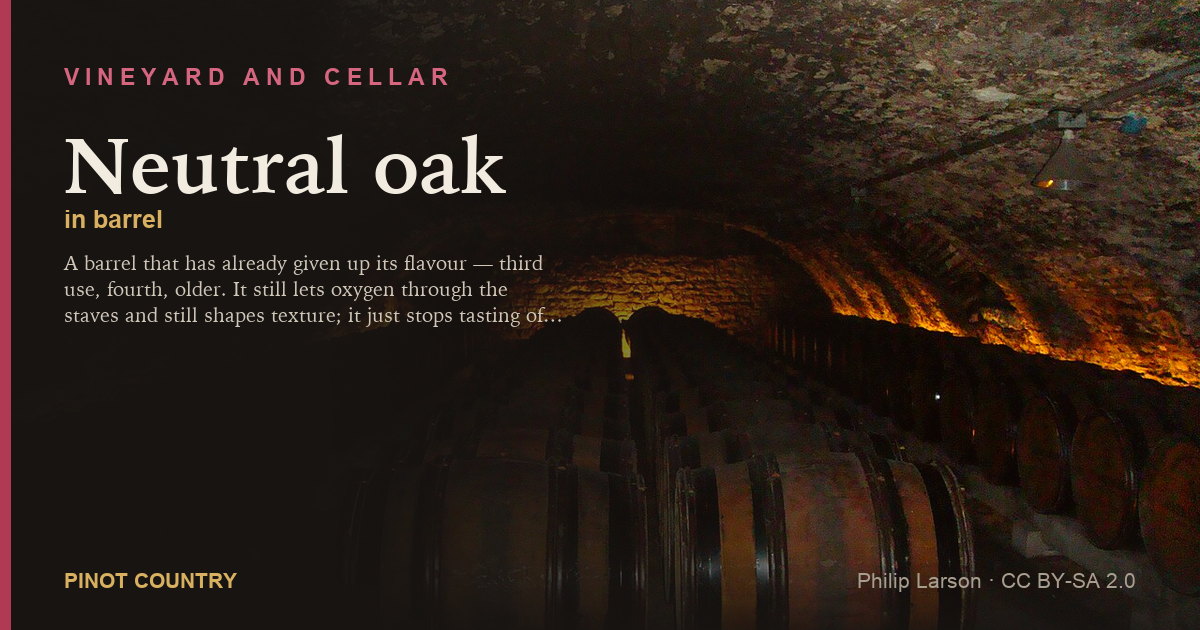 Neutral oak
Old barrels, Used barriques
A barrel that has already given up its flavour — third use, fourth, older. It still lets oxygen through the staves and still shapes texture; it just stops tasting of the forest.
In the fermenter (5)
 Cold soak
Pre-fermentation maceration, Macération à froid
Chilling the crushed fruit and holding it below fermentation temperature for days before the yeast start. Water pulls colour and aroma out of the skins; alcohol has not arrived yet to pull tannin.
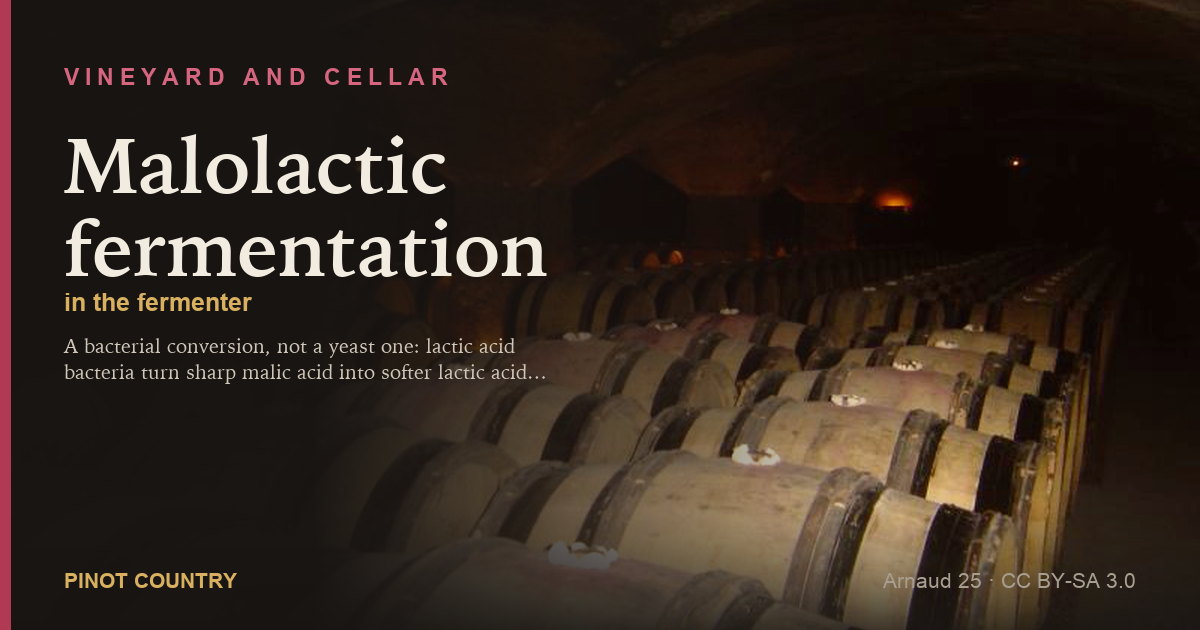 Malolactic fermentation
Malo, MLF, Secondary fermentation
A bacterial conversion, not a yeast one: lactic acid bacteria turn sharp malic acid into softer lactic acid and let off CO₂. Nearly every red pinot noir goes through it.
 Native yeast
Wild ferment, Spontaneous fermentation, Indigenous yeast
Letting whatever came in on the fruit and lives in the cellar start the ferment, instead of pitching a selected strain from a packet.
 Punching down
Pigeage, Punch-down
Pushing the floating cap of skins back under the wine, by foot or by plunger, several times a day. Pinot's cap rises fast and dries out if nobody moves it.
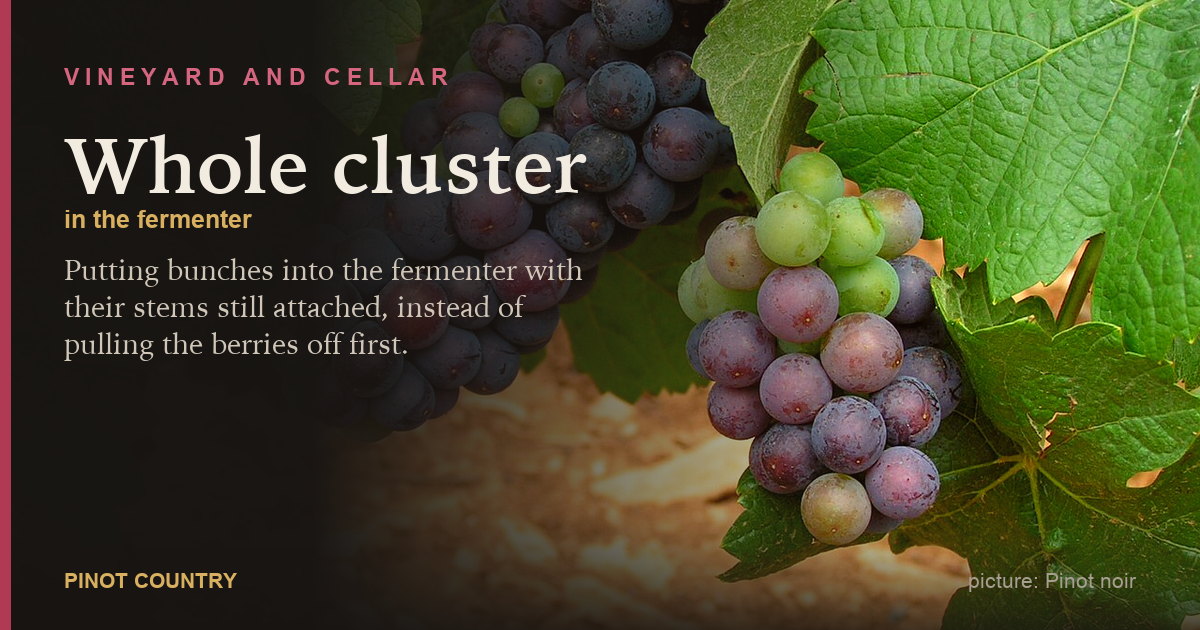 Whole cluster
Whole-bunch, Vendange entière, Stem inclusion
Putting bunches into the fermenter with their stems still attached, instead of pulling the berries off first.
Planting (2)
 High-density planting
Nine to twelve thousand vines a hectare, rows a metre apart, each vine carrying a handful of bunches. Burgundy's grand cru rules set a floor of 9,000 vines per hectare and the New World mostly did not follow.
 Massal selection
Sélection massale, Massale
Taking cuttings from many vines in a block you already trust, instead of ordering one numbered clone from a nursery. You keep the block's variation, and whatever virus it carries.
At the press (1)
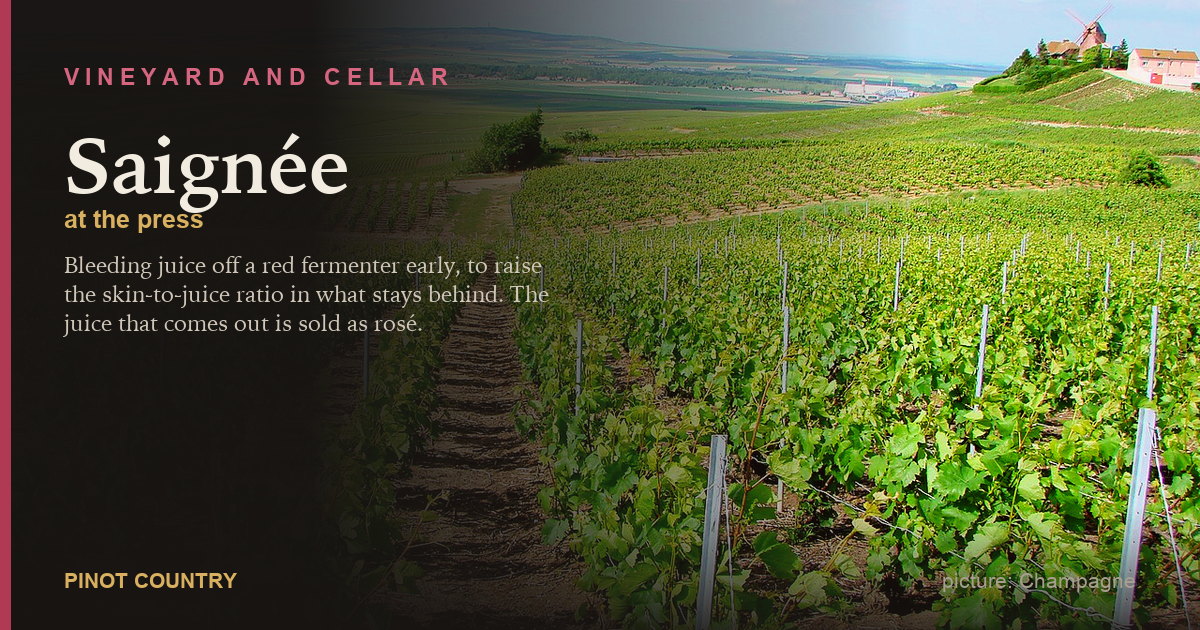 Saignée
Bleeding juice off a red fermenter early, to raise the skin-to-juice ratio in what stays behind. The juice that comes out is sold as rosé.
In the vineyard (2)
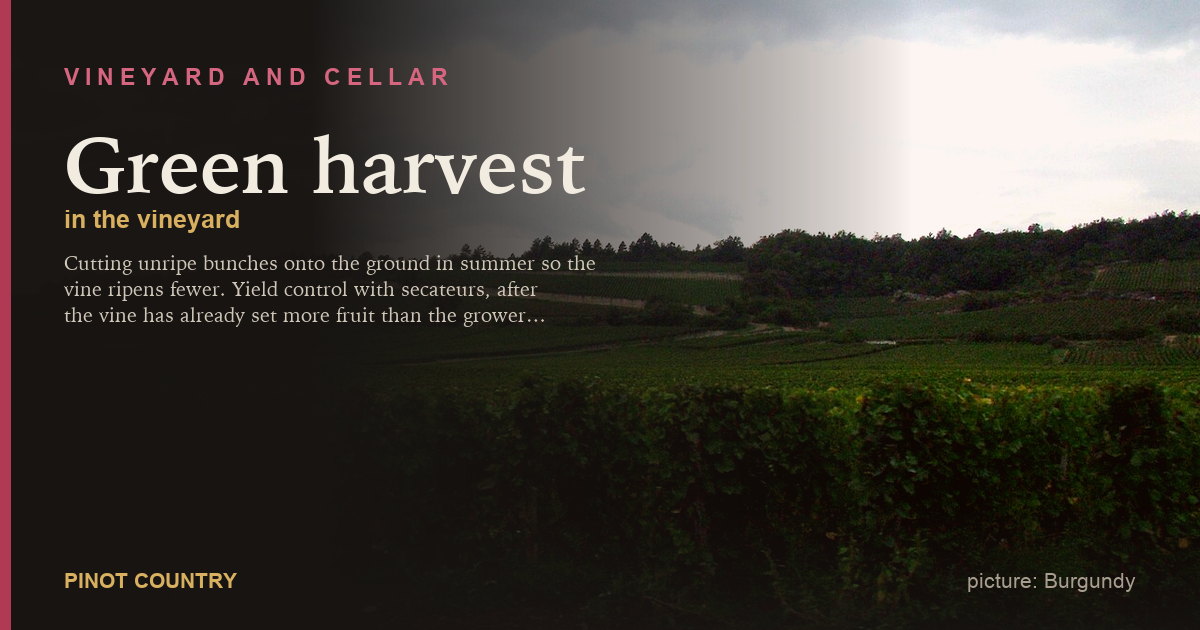 Green harvest
Vendange verte, Crop thinning
Cutting unripe bunches onto the ground in summer so the vine ripens fewer. Yield control with secateurs, after the vine has already set more fruit than the grower wants.
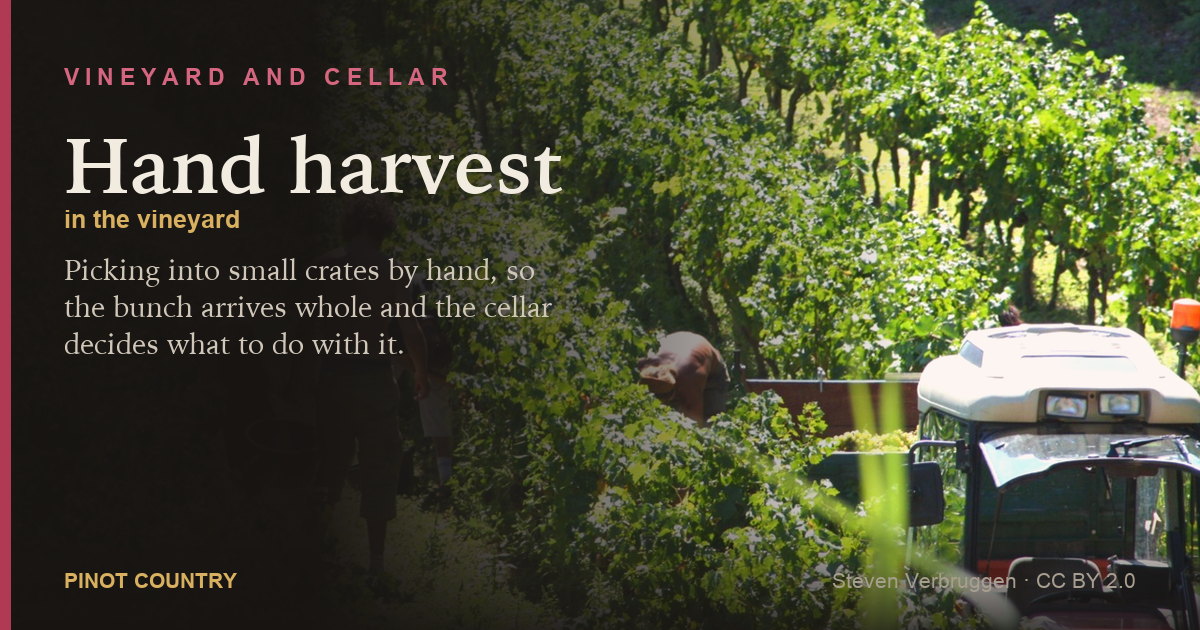 Hand harvest
Picking into small crates by hand, so the bunch arrives whole and the cellar decides what to do with it.