BedsWhere to put the nights
ควรนอนที่ไหนบ้าง
Four nights is the classic and five is the one that gets you the things the province is known for.
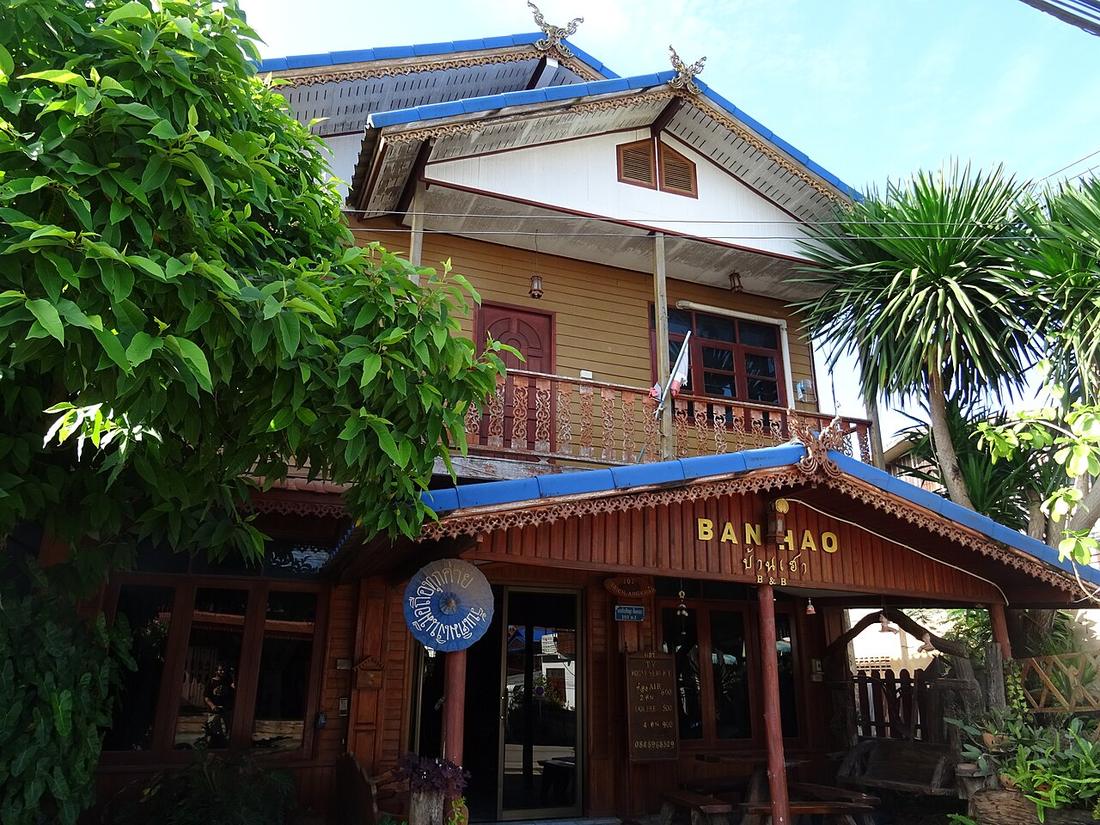 Christophe95 · CC BY-SA 4.0
What it is
Which towns are worth a night, which are worth two, and the one decision that changes the trip most.
The long version
Inference — the single highest-value change anyone can make to this itinerary is two nights in Mae Hong Son instead of one. Everything the province is actually known for is a dawn or an afternoon that a one-night stop cannot reach: the mist off Doi Kong Mu before the town wakes, Pang Ung at six in the morning, the dead-end road up to Ban Rak Thai, the lake temples lit after dark. One night gets you an evening and a departure.
Second-highest: stopping at Soppong rather than running Pai to Mae Hong Son in a day. It turns a long day ending in the hardest descent of the northern leg into two short ones with a cave in the middle.
Worth a night: Pai, Soppong, Mae Hong Son, Mae Sariang. Worth two: Mae Hong Son, and Pai if you want the valley rather than the town. Skip if pushed: Khun Yuam and Hot are stops, not stays, unless the Bua Tong is out.
What the harvest found: 417 places to stay are mapped within twelve kilometres of a town on this loop, 402 of them named. Pai has 259 of them and Soppong has 7, which tells you most of what you need to know about booking ahead in each.



Runs with
- townMae Hong Son — The two-night town.
- townSoppong — The stop that shortens the hardest day.
- stopPang Ung — The dawn the second night buys.
- stayThe hut with no wall on the valley side — What you are sleeping in when you get there.
Named here by
- storyThe ten minutes after you stop — Plan fewer kilometres than you think.
Where each claim comes from
| Field | Tier | Source | Note |
|---|---|---|---|
| default | harvested | OpenStreetMap — OpenStreetMap contributors | |
| text_th | inference | written in Thai by this project, not machine-translated |
Sources
- OpenStreetMap — OpenStreetMap contributors
- Mae Hong Son province — Wikipedia (en)
cited Cited — a named source, linked · harvested Harvested — fetched from an open dataset, with its licence · tradition Tradition — general knowledge of the tradition, hedged · inference Inference — this project's own reasoning from the above · field Field — someone stood there