WatsWat Chong Kham and Wat Chong Klang
วัดจองคำ และวัดจองกลาง
Two temples side by side on a lake in the middle of town, lit and reflected after dark.
 Christophe95 · CC BY-SA 4.0
What it is
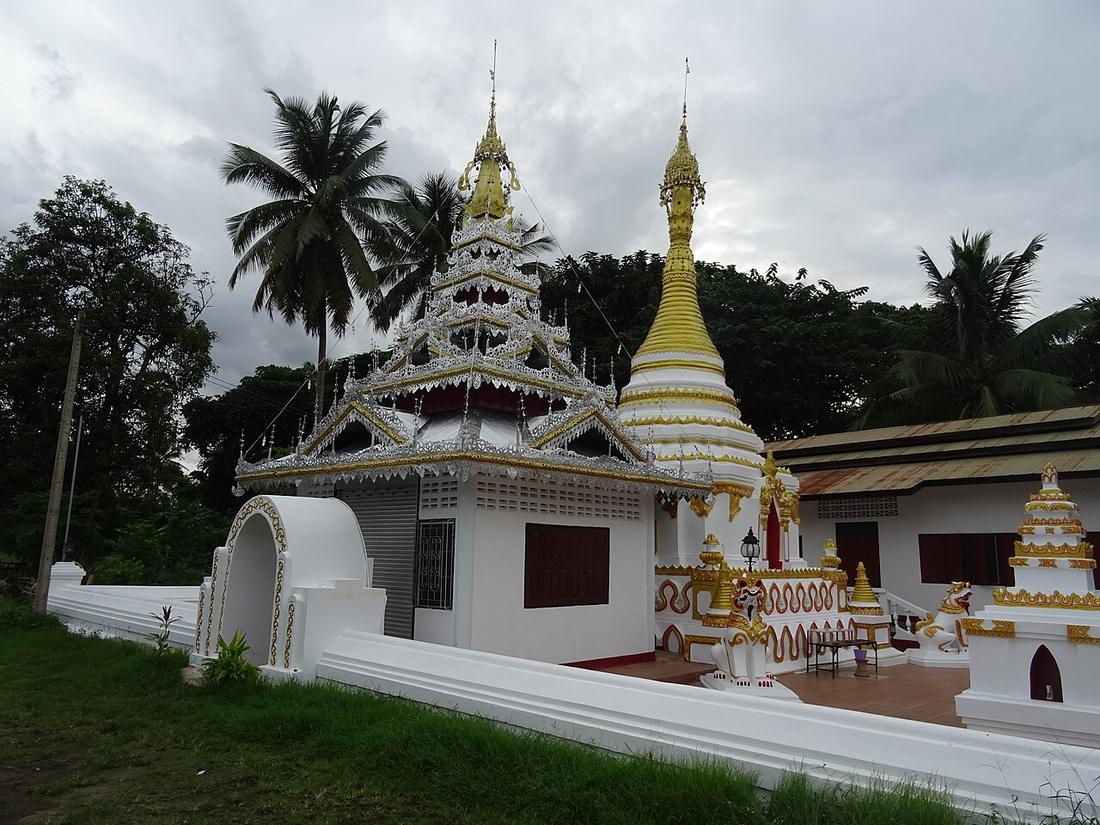
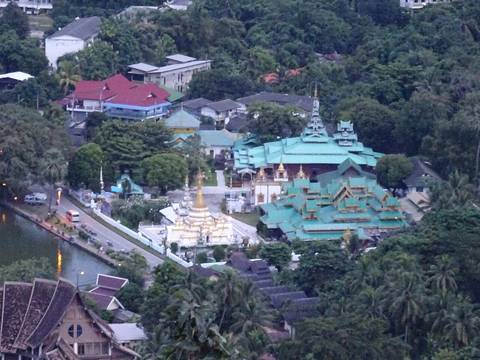
The pair of Shan-Burmese temples on Nong Chong Kham, the pond at the centre of Mae Hong Son town.
The long version
Inference — the tiered roofs, the tin, the fretwork and the whitewash are all Shan and Burmese rather than Lanna, and the reason is the border: this town was on the Shan side of a line that was drawn in the 1890s.
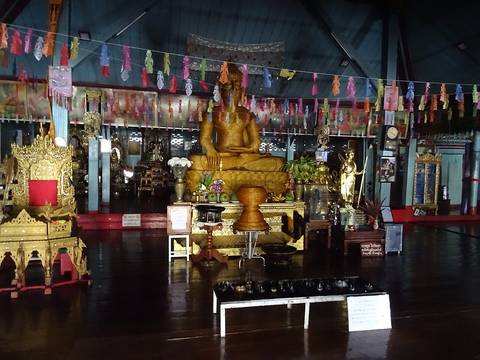
Tradition holds — Wat Chong Klang holds a set of painted glass panels and carved figures brought from Burma, on Buddhist narrative subjects.
The practical note for a rider: this is a two-minute walk from anywhere in the town centre, it is free, and the hour that makes it is after dark, when both are lit and the pond does the work. It is the reason an evening in Mae Hong Son is not wasted.
Runs with
- townMae Hong Son — The town they are the centre of.
- watWat Phra That Doi Kong Mu — The other one, on the hill.
- personThe Shan — Whose temples these are.
Named here by
- watWhy the temples here are called Chong — The two the word is most attached to.
- eventLoi Krathong and Yi Peng — The two lit temples the floats go between.
- eventKhao Phansa and Ok Phansa — Where the candles go.
Where each claim comes from
| Field | Tier | Source | Note |
|---|---|---|---|
| default | cited | Mae Hong Son — Wikipedia (en) | |
| text.story | cited | Mae Hong Son — Wikipedia (en) | |
| text_th | inference | written in Thai by this project, not machine-translated |
Sources
- Mae Hong Son — Wikipedia (en)
- Shan people — Wikipedia (en)
- Mae Hong Son province — Wikipedia (en)
cited Cited — a named source, linked · harvested Harvested — fetched from an open dataset, with its licence · tradition Tradition — general knowledge of the tradition, hedged · inference Inference — this project's own reasoning from the above · field Field — someone stood there