Two halves. Wai khru is paying respect to the teacher — kneeling, bowing three times toward the corner. Ram muay is the dance that follows, which is the fighter's own and belongs to his gym.
Wai khru is not a boxing ritual. The Thai article on it lists the same ceremony for school teachers, for shadow puppetry, for krabi-krabong, and for writing poetry: the form belongs to apprenticeship in general, and boxing is one of its borrowers.
What the fighter is doing in the second half is more specific. A ram muay is taught, it is a gym's signature, and a Thai watching can often name the camp from it. It also tells the other corner something: a man who takes his time in the dance is making a statement about his own composure while the other man stands there in the cold.
Inference — the reason the ceremony survived professionalisation intact, when the rope, the bare feet and the open-weight matchmaking all went, is that it costs the promoter nothing and fills four minutes of a television slot.
Yant on skin, yant on the cloth at the arm, yant rolled in metal at the waist, yant braided into the cord on the head. A fighter walking to the ring is usually wearing three of the four.
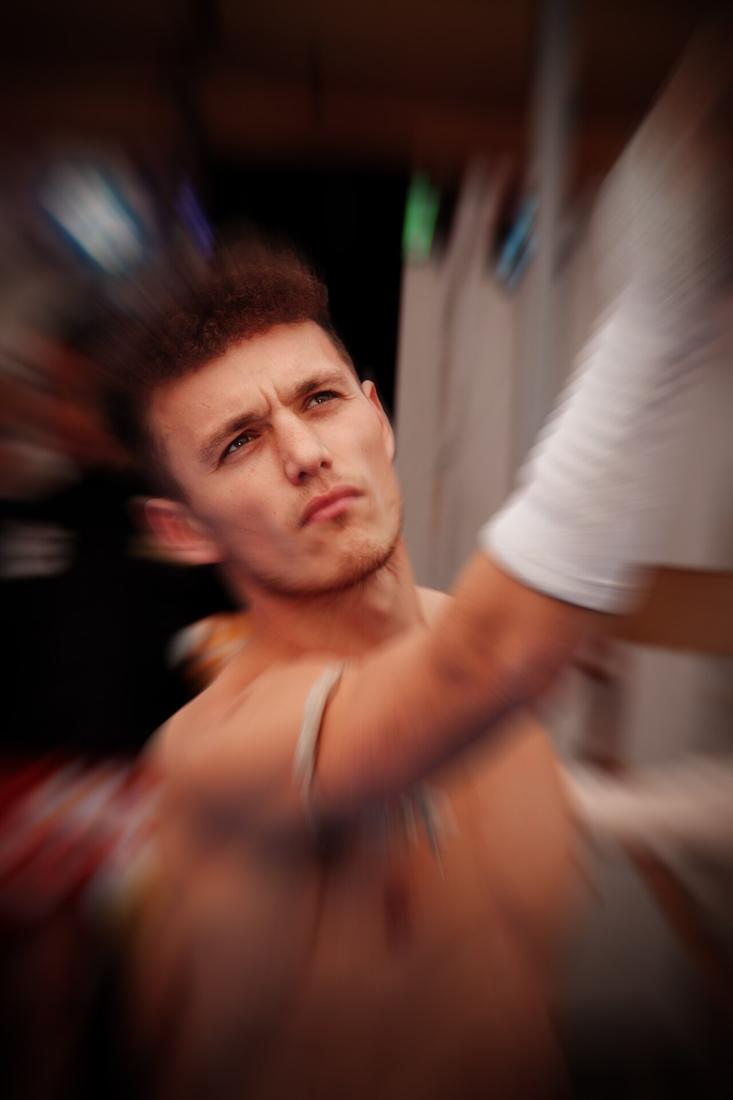
NaN · Taken at Sak Yant Chiang Mai, used with permission · CC BY 4.0
The ceremony
The headband, the armbands, the dance before the fight, and the tattoo under the shirt.