a signHot sauce labels
also: hot sauce bottle art · pepper sauce labels
A hot sauce label sells one thing before it sells any other: how much it will hurt. The genre has a settled vocabulary — devils, flames, skulls, warning text set like a hazard placard, a name that is a dare, and often a number. Beneath the artwork the same panel carries what federal law requires, including an ingredient list in descending order by weight, which is why this site can read a bottle's ingredient rank off a photograph of its back. The front is a promise. The back is a fact.
The promise on the front
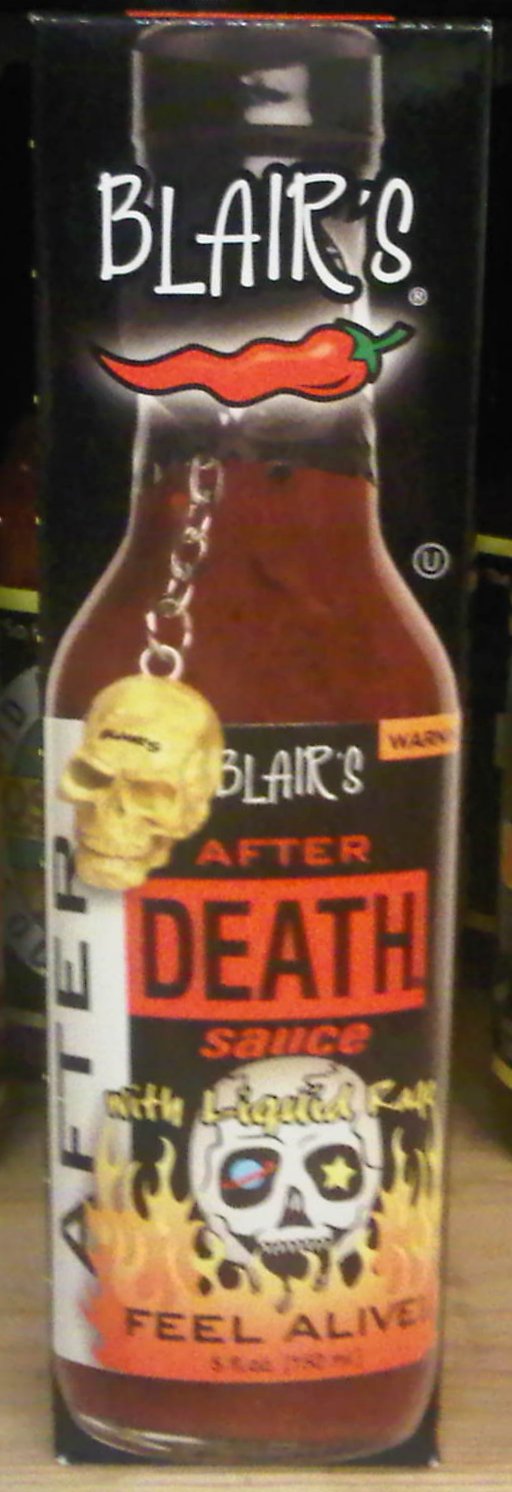
Tradition holds — the front panel works a short list of devices. A devil, horned and usually cheerful. Flame, as a border, a background, or lettering on fire. A skull, sometimes with the pepper in its teeth. A pepper drawn as a character. Warning type in a yellow-and-black band, borrowed from industrial hazard signage. A name doing the dare — atomic, ghost, reaper, death, insanity.
The register is comic rather than frightening, and deliberately so: the buyer is being invited to take a risk that is safe.
The number, and when it means anything
Scoville heat units get printed on labels as a headline figure. A Scoville number is only worth something where somebody publishes the measurement and says who made it, which is why this site records a scoville value on a sauce only where a maker or a lab publishes one, and never estimates it.
What a label always does carry is the maker's own heat word — mild, medium, hot, extra hot, atomic — and this site records that verbatim, as the maker's claim rather than as a measurement.
The heritage label
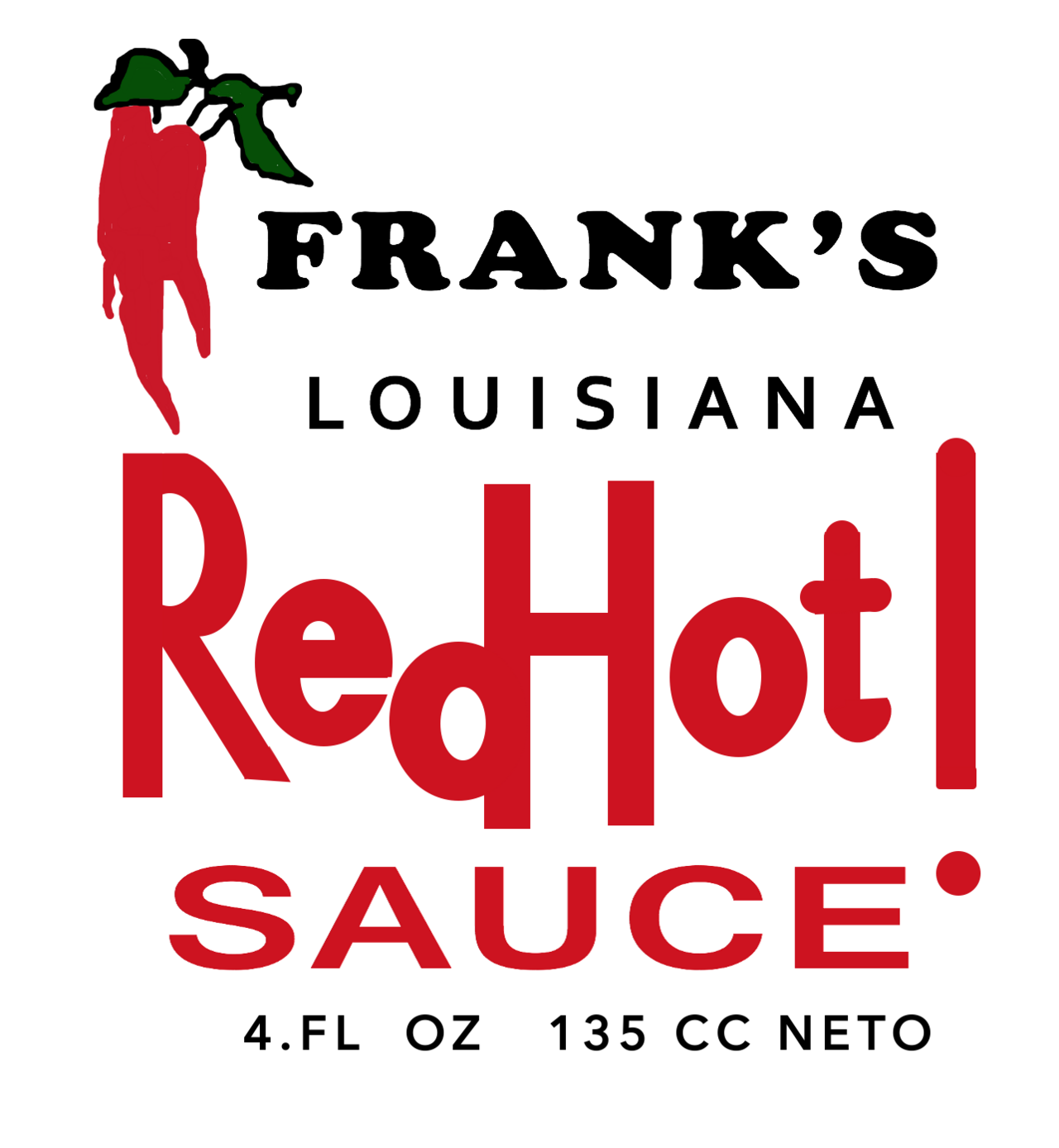
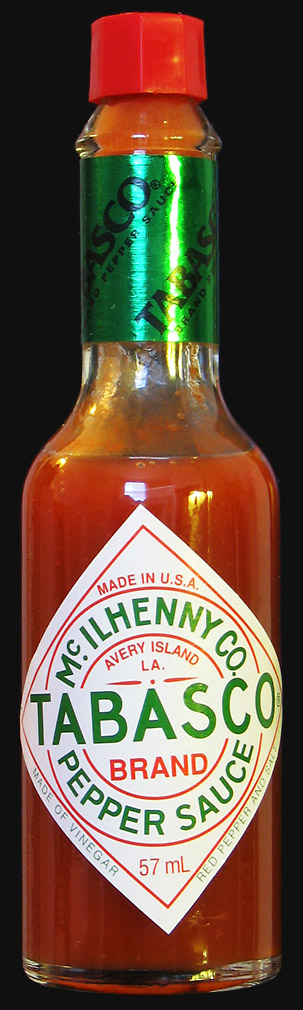
The oldest American brands keep old labels on purpose. Tabasco, from the McIlhenny Company, appeared in 1868 and is the earliest recognisable brand in the US hot sauce trade; its diamond label, small bottle and green cap are effectively unchanged as design elements. Frank's RedHot's 1965 label survives as an image on Wikimedia Commons under CC BY-SA 4.0.
Inference — a heritage label is an argument about age in the same way a wing shop's hand-painted window is. It says the recipe has not moved. Whether the recipe has moved is a separate question the label does not answer.
The challenge bottle
Tradition holds — a category of label exists for sauces that are not really condiments: extract sauces sold as an ordeal, in small bottles, often with a coffin, a skull-shaped bottle, or a wax seal, and with copy that instructs the buyer to use one drop. They are the bottled version of the extra-hot wing challenge a bar runs with a photograph on the wall for whoever finishes.
The design signals the change of category. A sauce meant for food gets a food label; a sauce meant for a dare gets packaging borrowed from poisons and from heavy metal record sleeves.
What the back panel must say
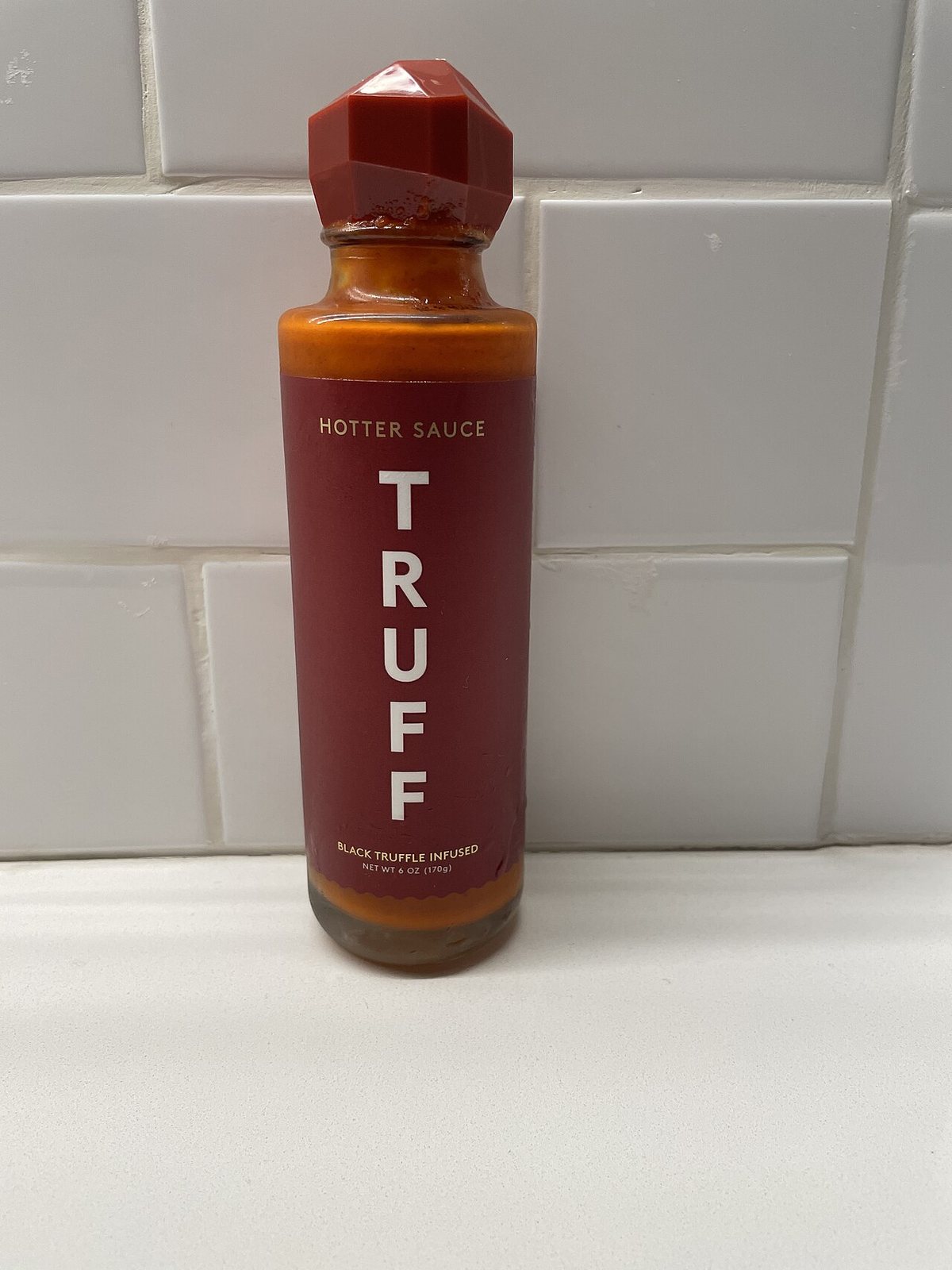
The regulated side. An ingredient list in descending order by weight, a net quantity, a nutrition panel with a stated serving size, the maker's name and place, and allergen information where it applies.
That ordering requirement is what makes a label usable as data. Read the list and you know whether the sauce leads with peppers, with vinegar, with tomato or with sugar, which is more informative about how it will taste than anything on the front. This site's sauce profiles are built out of exactly that: ingredient rank in label order, plus sodium and sugar per tablespoon from the panel.
The shelf
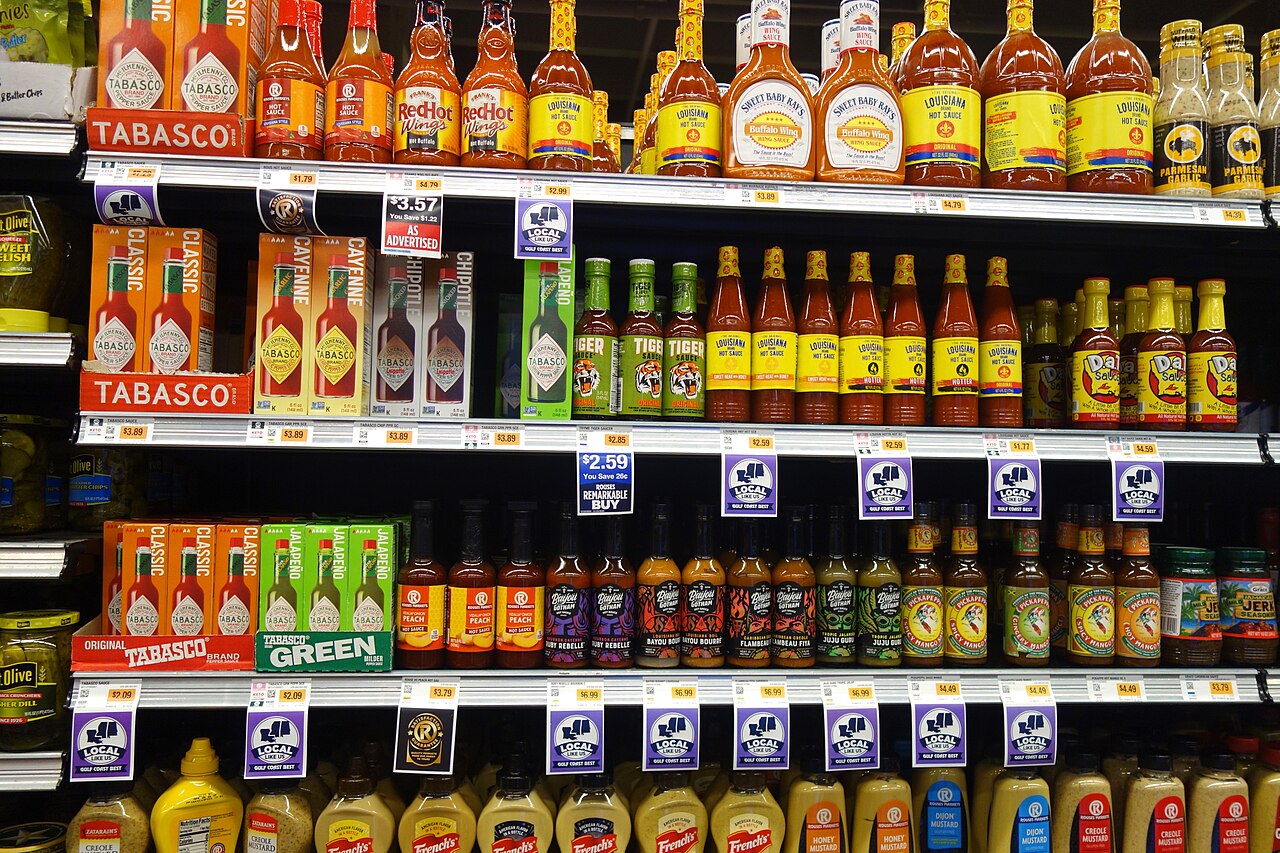
Inference — hot sauce is merchandised in a way that pushes the labels toward shouting. It sits in a long row of small bottles, most of a similar shape, at a similar price, where the whole differentiation happens in about four inches of front panel viewed at arm's length. That is a harder design brief than a wing counter's sign has, and it explains the volume of the graphics better than any claim about the buyers does.
The particulars
| kind | |
|---|---|
| region | The United States |
| confidence | medium · needs verification · updated 2026-09-16 |
Who it runs with
Who talks about it
Pictures





Where we got it
- Hot sauce · link
- Tabasco sauce · link
- Scoville scale · link
- FoodData Central · link
- Wikimedia Commons file search (MediaWiki API, action=query&list=search, namespace 6) · link
Where it came from: Cited a source we name · Harvested pulled from an open dataset · Tradition what the tradition says, hedged · Inference this project's reasoning · Field somebody stood there. This record as JSON.