a signNeon chicken
also: neon bird · neon chicken sign
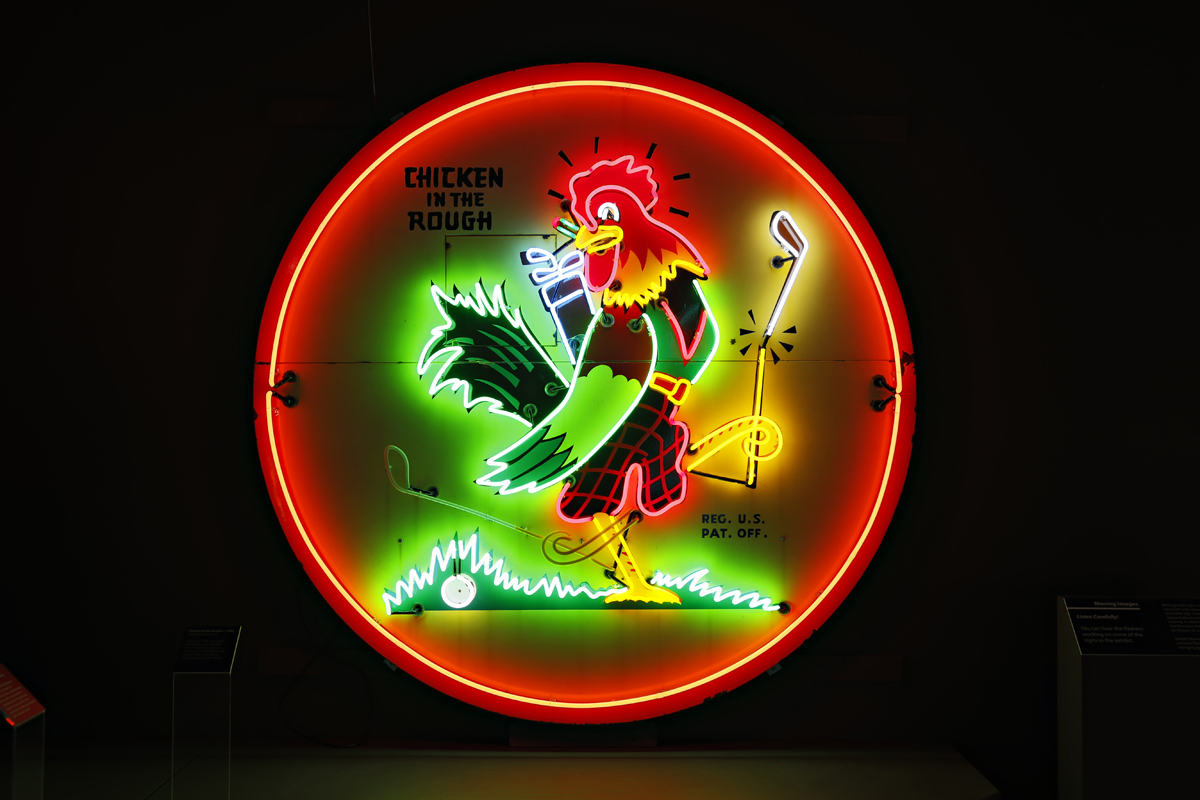
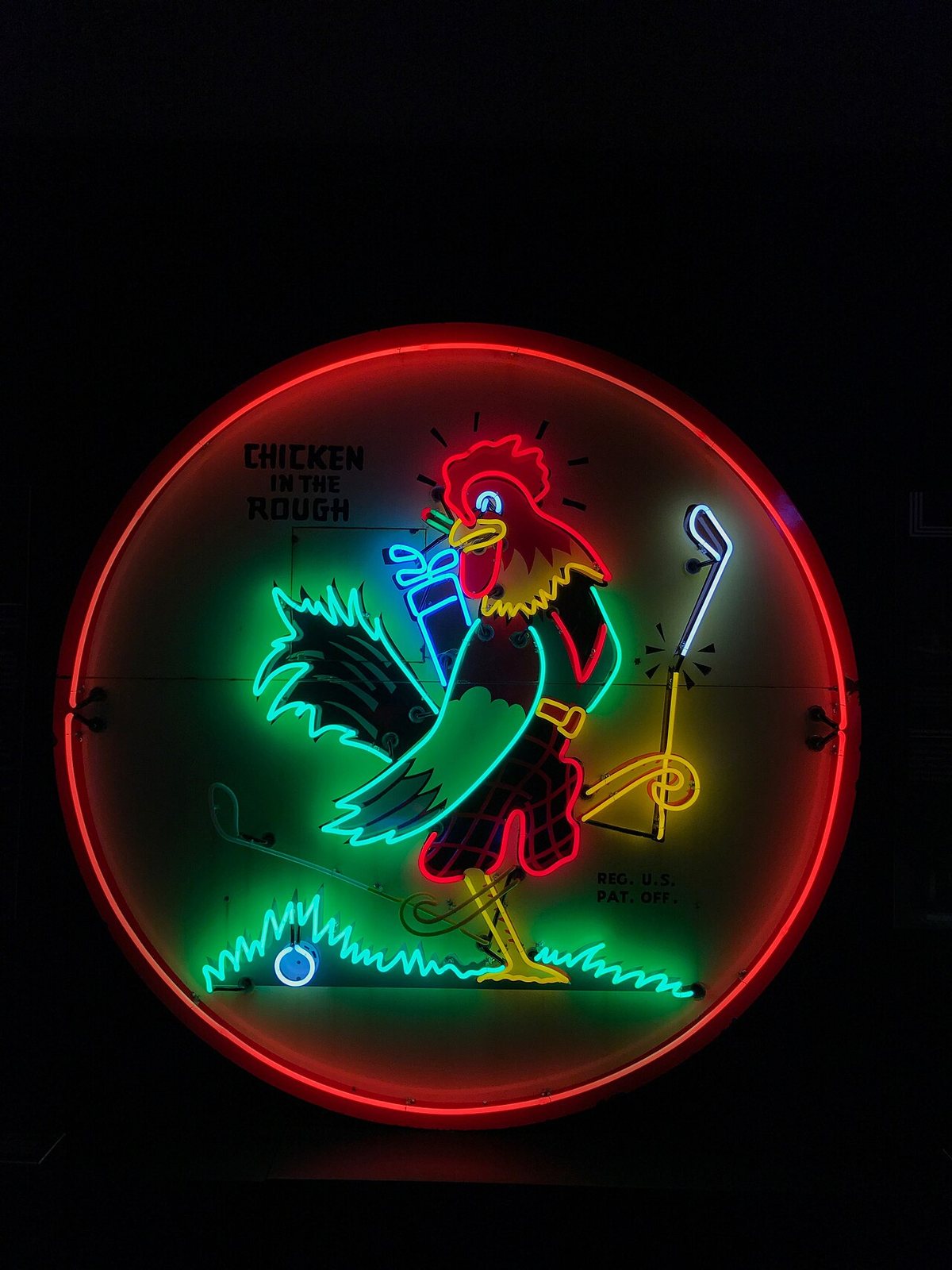
A chicken drawn in bent glass tube, filled with gas, and run off a transformer over a bar, a drive-in or a wing counter. The bird is usually animated in the cheap way neon animates: two or three sets of tubes switched in sequence so a wing flaps, steam rises, or an arrow chases. Neon signs are made by hand, by a bender working a ribbon burner, which is why a town's neon looks like the shops of the two or three benders who worked there. They are expensive to build, expensive to repair, and the first thing an owner replaces when a tube goes, which is why the surviving ones are mostly in cities that decided to protect them.
How the bird is made
Tradition holds — a neon sign starts as a full-size drawing on fireproof paper. The bender heats soft glass tube over a ribbon burner and works it against the pattern, bend by bend, blowing gently to keep the bore open. Electrodes go on the ends; the tube is pumped down, bombarded to drive out impurities, and filled — neon for red and orange, argon with a drop of mercury for blue, and coloured or phosphor-coated glass for everything else. A transformer supplies the high voltage.
A chicken is a hard shape for it. Curves in tube have a minimum radius, so a bird's beak, comb and tail feathers get simplified until they read at fifty feet — which is the reason neon birds look like each other. The medium does the stylising.
Why a bird, and why lit
Neon belongs to the hours a wing counter works. It is legible from a road after dark, it needs no separate illumination, and it holds colour in rain in a way a painted panel does not.
Inference — the bird is the same bird as on the painted signs, and for the same reason: the shop is selling a category before it sells a name. Lighting it changes the register rather than the message. A lit chicken over a door reads as open, which a painted one never can.
Animation, done cheaply
Tradition holds — neon animates by switching rather than by moving. Two wing positions on separate circuits, flashed alternately, make a bird flap. Three arrows lit in sequence pull the eye toward a door. Steam is three curls that light bottom to top. The controller is a rotating drum or, later, a solid-state flasher, and the whole vocabulary is about a dozen tricks long.
It is the animation that dates a sign more precisely than the lettering does, because a flasher is a component with a period.
Where they hang
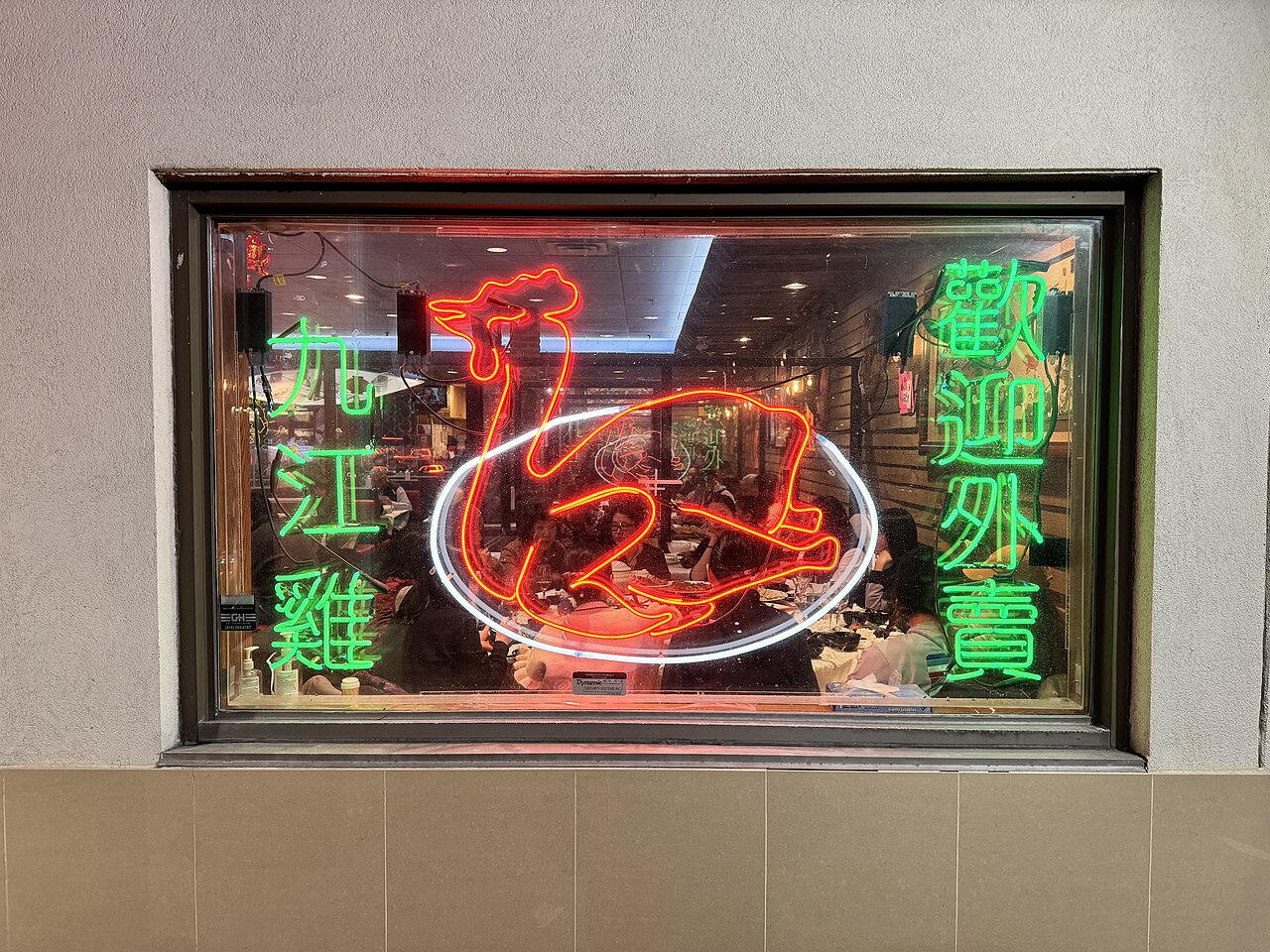
Over the door of a corner bar, in the window beside the beer signs, on a pylon at a drive-in, and along a commercial strip where the sign has to compete with the sign next door. The wing counter's neon is usually small and in the window — OPEN, WINGS, the bird — rather than a pole sign, because the shop rents a storefront and cannot put anything on the roof.
Loss, and what is left
Neon dies by degrees. A cracked tube goes dark and gets left dark; the electrode fails and the section stays out; the transformer hums and gets unplugged. A bender has to come, which costs more than a printed banner over the whole thing.
Inference — that economics, more than taste, is why neon retreated. LED channel letters and flexible LED tube do a passable imitation for a fraction of the maintenance, and most of what reads as neon on a wing counter in 2026 is LED.
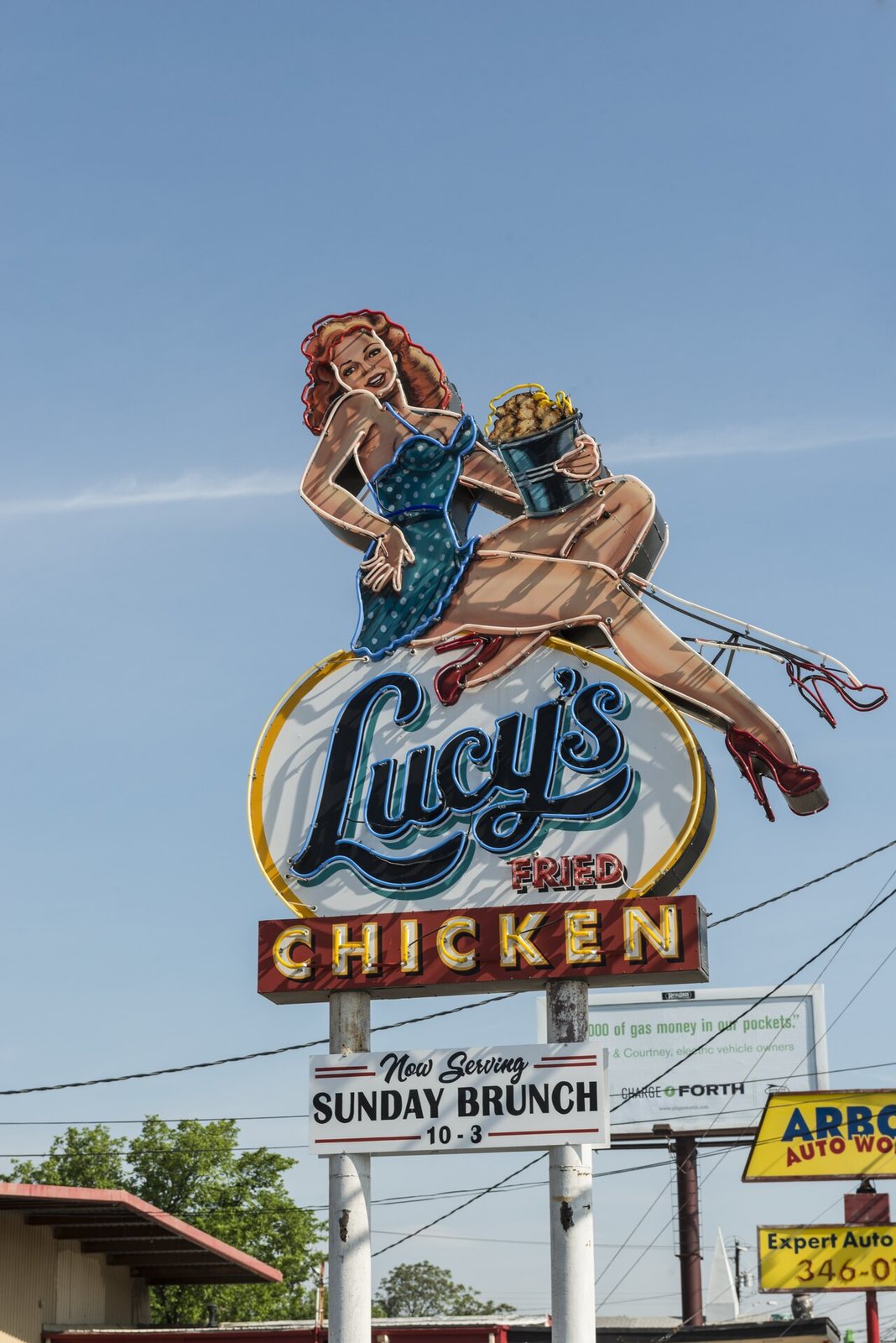
The public photographic record is thinner than the painted-sign record. Carol M. Highsmith photographed a neon sign at a Lucy's Fried Chicken on Burnet Road in Austin, Texas in April 2014, and the image is public domain through the Library of Congress; museum neon exhibits and civic sign parks account for much of the rest on Wikimedia Commons.
The sign as an asset
Tradition holds — an old neon sign outlives the business under it more often than not. It gets sold with the building, adopted by the next tenant, bought by a collector, or taken into a museum. A chicken that once advertised a fry counter can end up over a bar that serves no chicken at all, which is how a sign becomes a piece of furniture.
The particulars
| kind | neon |
|---|---|
| region | The United States |
| confidence | medium · needs verification · updated 2026-09-16 |
Who it runs with
Pictures



Where we got it
- Wikimedia Commons file search (MediaWiki API, action=query&list=search, namespace 6) · link
- Commons:Licensing · link
Where it came from: Cited a source we name · Harvested pulled from an open dataset · Tradition what the tradition says, hedged · Inference this project's reasoning · Field somebody stood there. This record as JSON.