Wing CountryOut back (15)
Cuts, coatings, oils, fryers, smokers, the toss.
Coatings (3)
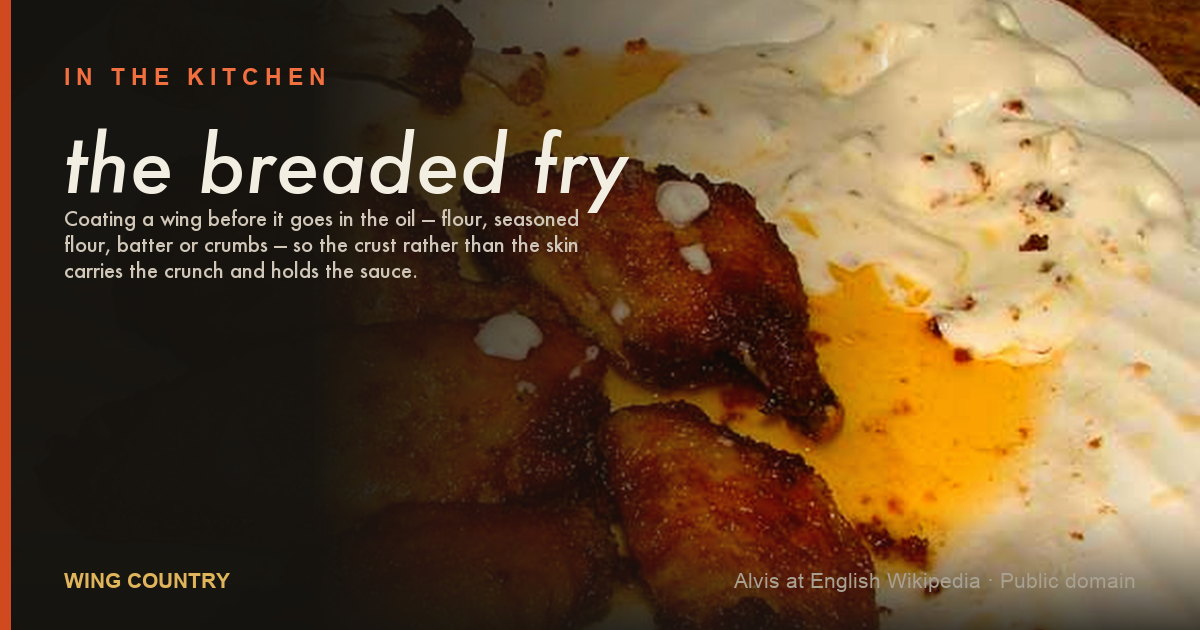 the breaded fry
breaded, dredged and fried, Rochester-style
Coating a wing before it goes in the oil — flour, seasoned flour, batter or crumbs — so the crust rather than the skin carries the crunch and holds the sauce.
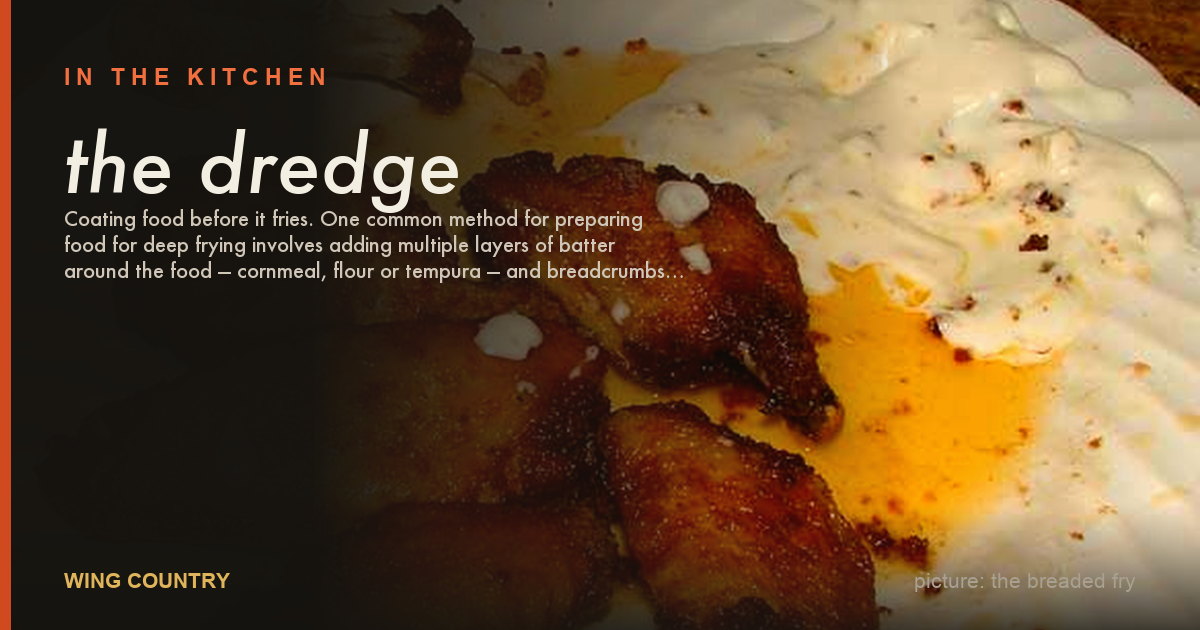 the dredge
dredging, the flour, the breading station
Coating food before it fries. One common method for preparing food for deep frying involves adding multiple layers of batter around the food — cornmeal, flour or tempura — and breadcrumbs may be used.
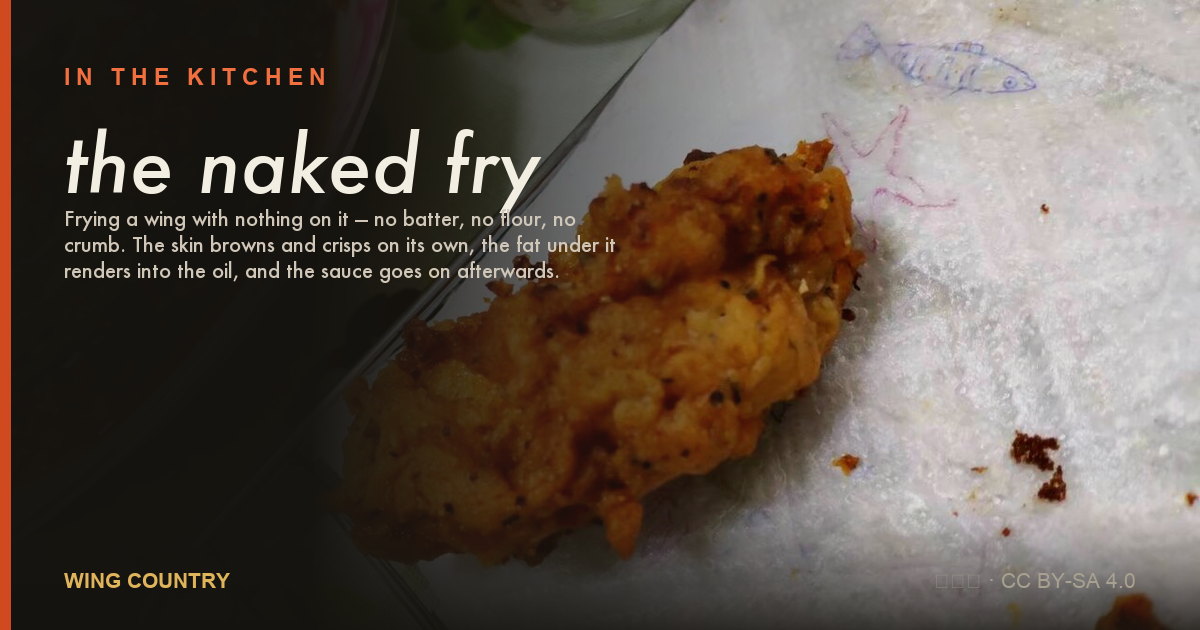 the naked fry
naked, unbreaded, bare
Frying a wing with nothing on it — no batter, no flour, no crumb. The skin browns and crisps on its own, the fat under it renders into the oil, and the sauce goes on afterwards.
Cuts (1)
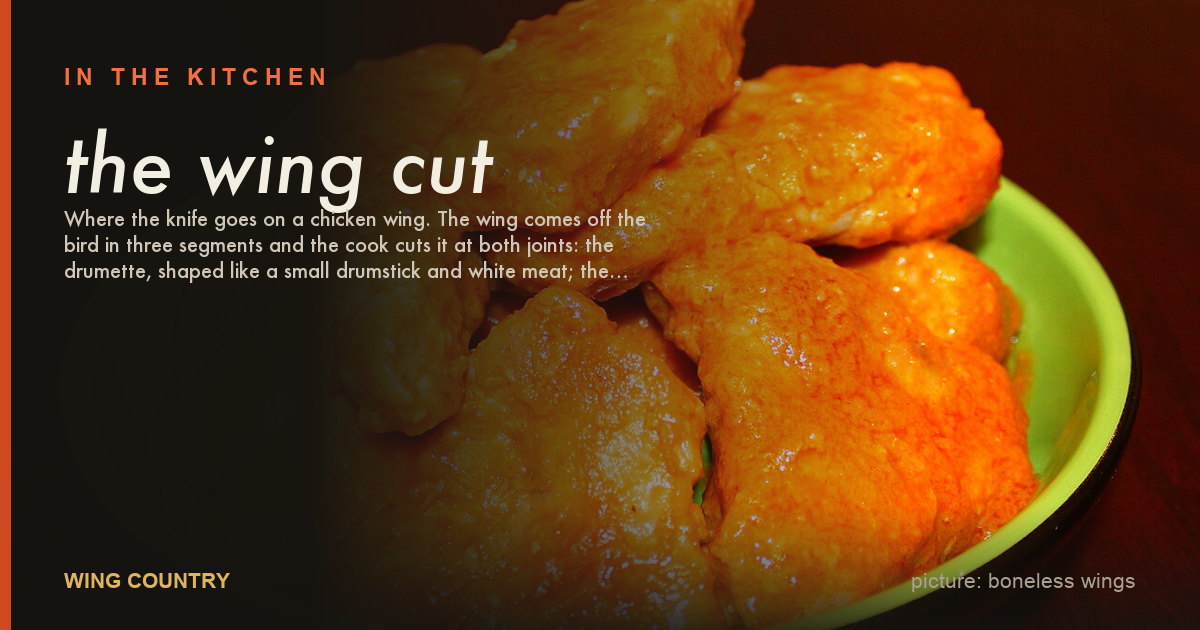 the wing cut
breaking down a wing, segmenting, jointing the wing
Where the knife goes on a chicken wing. The wing comes off the bird in three segments and the cook cuts it at both joints: the drumette, shaped like a small drumstick and white meat; the middle flat, also called the…
Fryers (1)
 the deep fryer
the fryer, fry vat, chip pan
The machine or pot the wing goes into: food submerged in hot fat rather than shallow-fried in a pan. A commercial vat, a chip pan, a wok, a Dutch oven or a cast-iron pot all do it.
Heat (1)
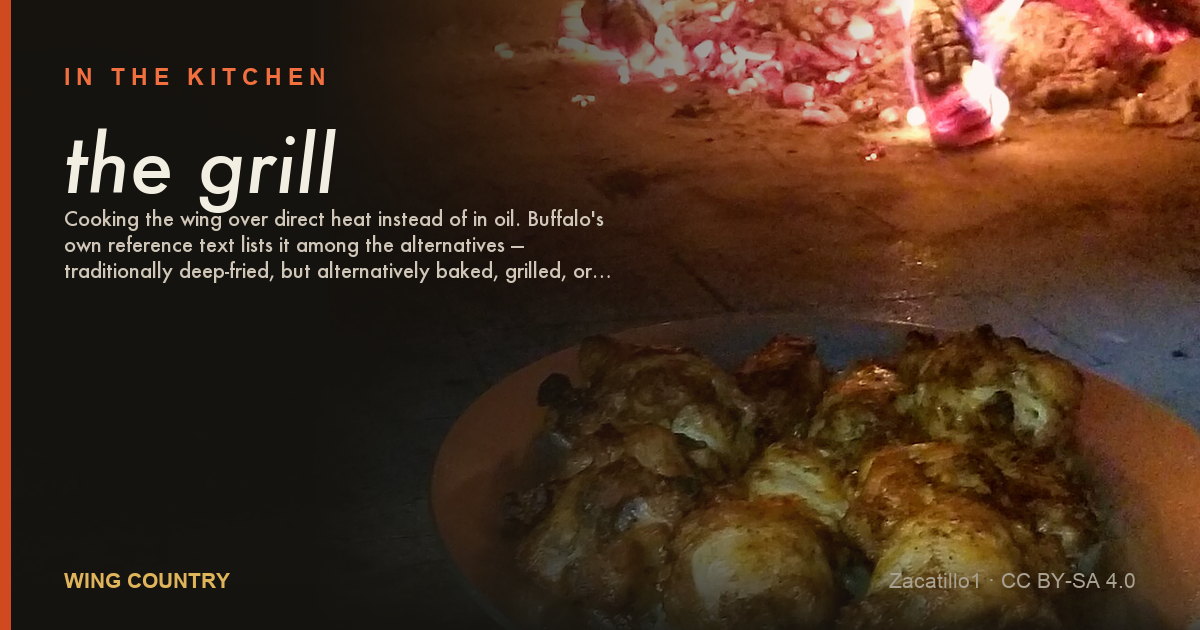 the grill
grilled wings, over coals, the drum
Cooking the wing over direct heat instead of in oil. Buffalo's own reference text lists it among the alternatives — traditionally deep-fried, but alternatively baked, grilled, or broiled — and the Anchor Bar's account…
Methods (5)
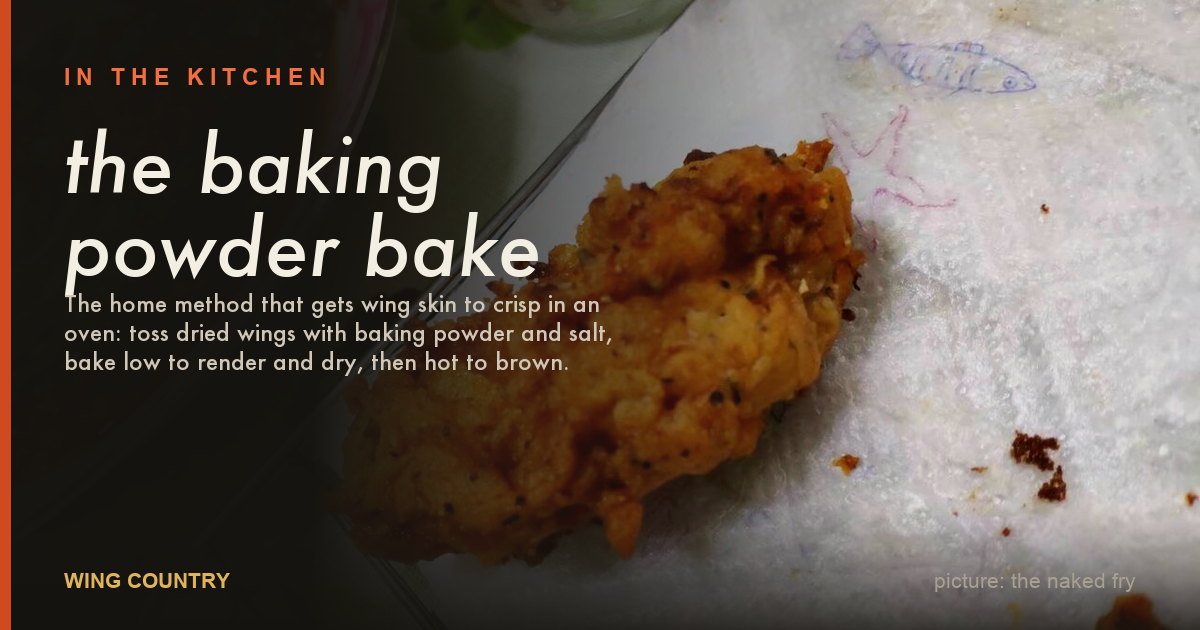 the baking powder bake
oven wings, baked wings, no-fry wings
The home method that gets wing skin to crisp in an oven: toss dried wings with baking powder and salt, bake low to render and dry, then hot to brown.
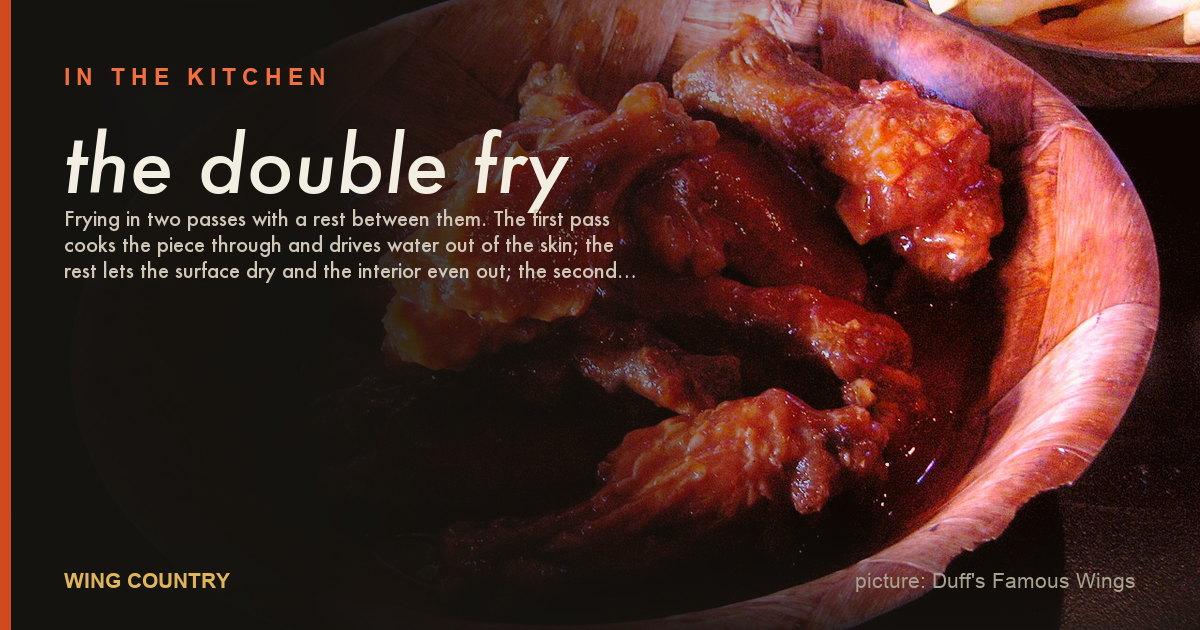 the double fry
frying twice, two-stage fry
Frying in two passes with a rest between them. The first pass cooks the piece through and drives water out of the skin; the rest lets the surface dry and the interior even out; the second pass, hotter, builds the crust.
 the par-cook
par-frying, blanching, the first fry
Cooking the wing most of the way in advance and finishing it to order. The first pass drives out water and cooks the meat through; the finishing pass, hotter and short, browns it.
 sauce on the side
on the side, naked with sauce, dry with a cup
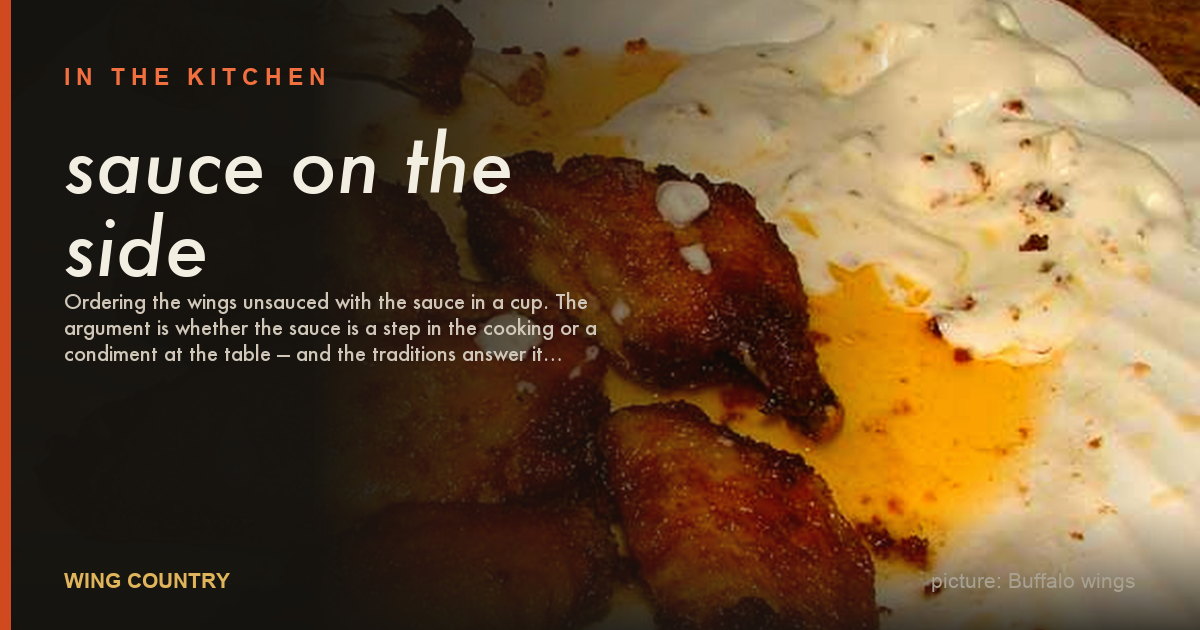
Ordering the wings unsauced with the sauce in a cup. The argument is whether the sauce is a step in the cooking or a condiment at the table — and the traditions answer it differently, on the record, in their own methods.
 the toss
the bowl, tossing, shaking the wings
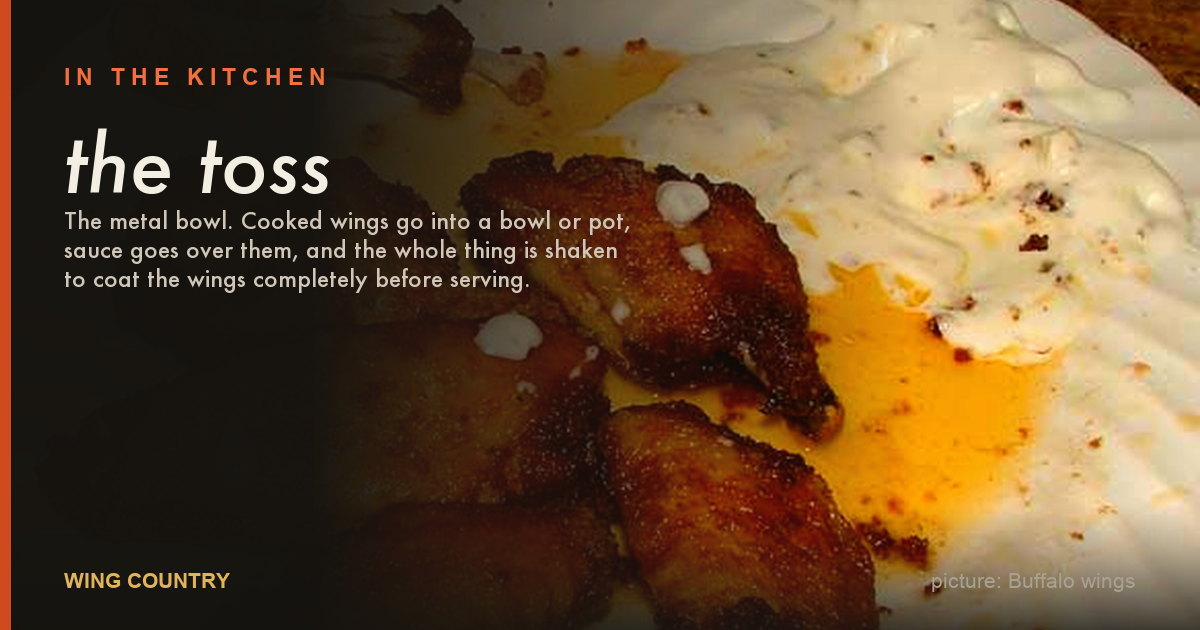
The metal bowl. Cooked wings go into a bowl or pot, sauce goes over them, and the whole thing is shaken to coat the wings completely before serving.
Oils (1)
 frying oil
the fat, the oil, shortening
What the wing is cooked in. Deep frying submerges food in hot fat — traditionally lard, today most commonly oil — and the choice of fat sets flavour, how long the vat lasts, what the shop pays and what goes on the…
Preparation (1)
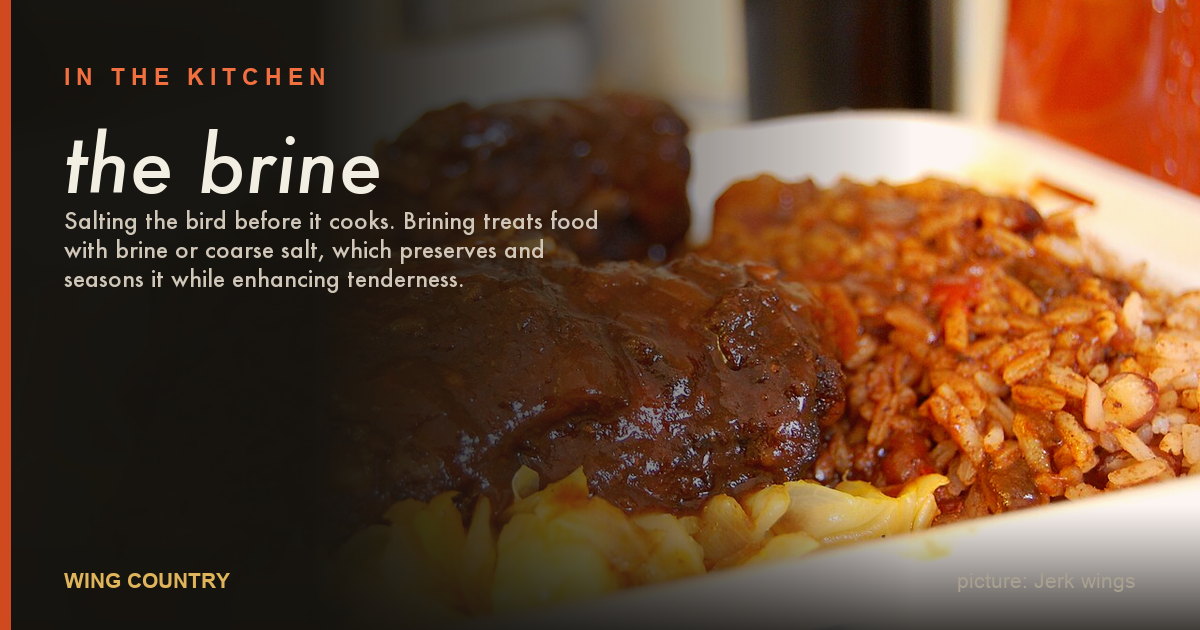 the brine
brining, buttermilk soak, dry brine
Salting the bird before it cooks. Brining treats food with brine or coarse salt, which preserves and seasons it while enhancing tenderness.
Smoke (1)
 smoke then fry
smoked and flashed, smoke-fried wings
Cooking the wing through in smoke, then dropping it briefly into hot oil or onto high heat to tighten the skin. Smoke gives flavour and colour that a fryer cannot; the fryer gives a crust that smoke alone leaves flabby.
Tools (1)
 the air fryer
air frying, countertop convection oven
A small countertop convection oven that reaches deep-frying temperatures without submerging the food in oil.