a sauceYangnyeom sauce
also: yangnyeom · seasoned sauce · sweet and spicy
양념 means seasoning. Order banban — 반반, half-half — and the box arrives half in this sauce, half plain.
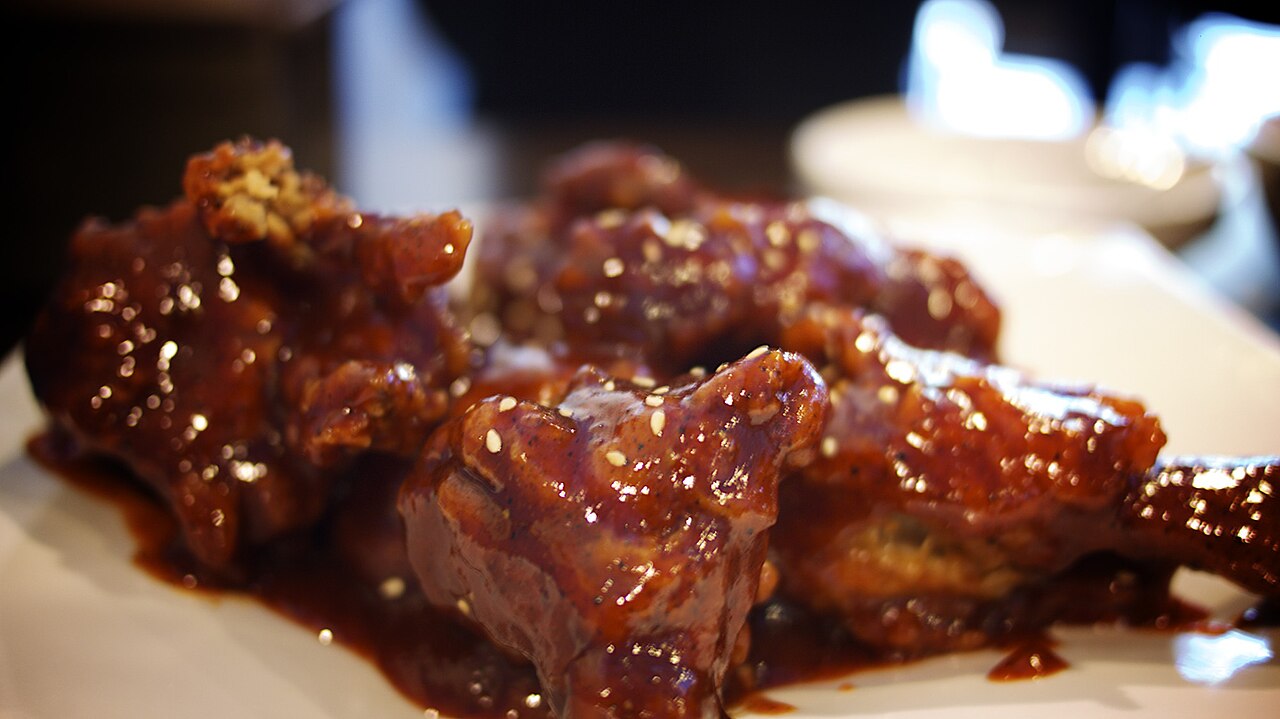
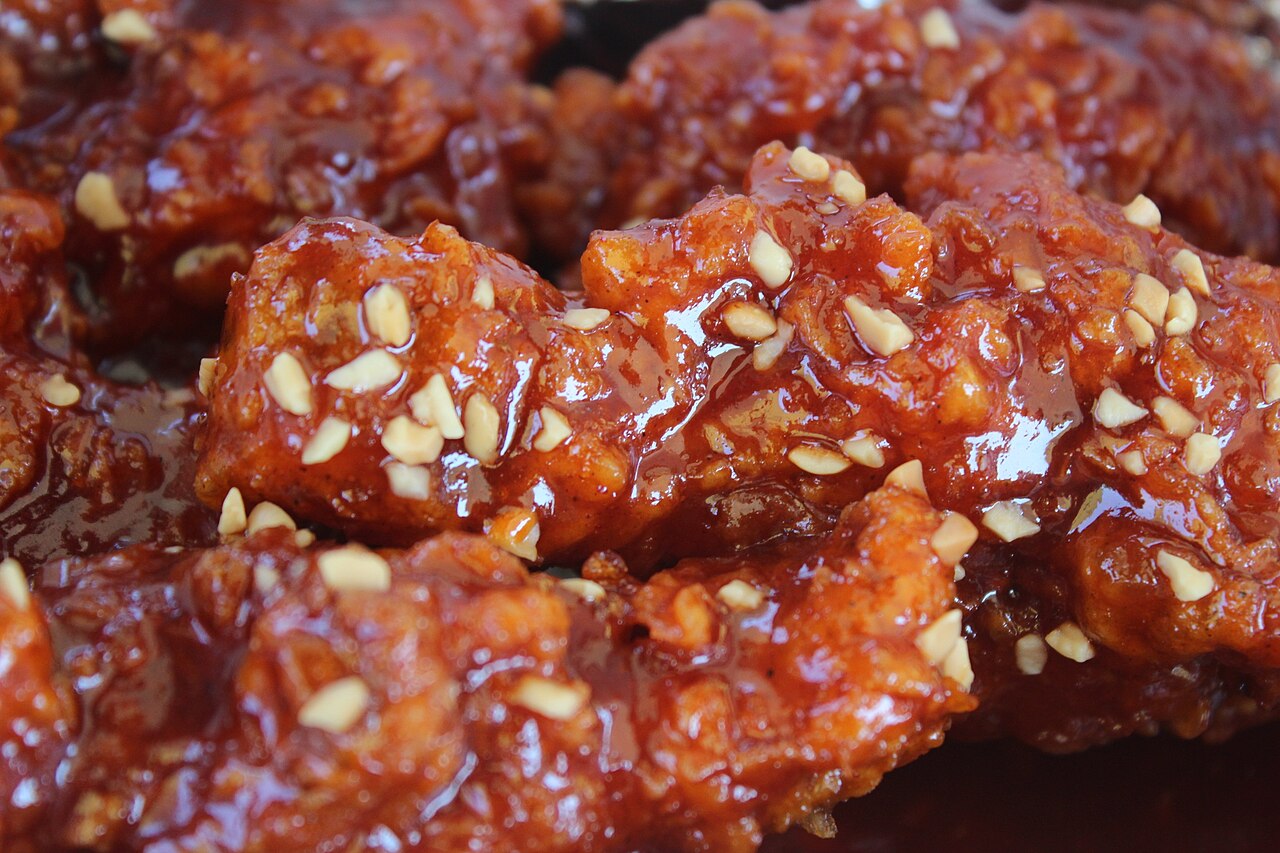
A sweet and spicy glaze built on gochujang — a fermented Korean paste of red chili powder, glutinous rice, fermented soybean powder, barley malt powder and salt — with garlic, sugar and other seasonings. Painted onto fried chicken with a brush after the fryer, in a thin even coat rather than a toss. Yangnyeom chicken is the dish; this is what makes it.
The story Cited · wp-korean-fried-chicken
Yun Jonggye started it in 1982, at a fried chicken restaurant in Daegu that later became Mexican Chicken. He noticed customers struggling with the hard, crisp layers of fried chicken — scraped palates among the complaints — and decided to soften the shell by marinating the bird sweet and spicy.
The ground was already laid. Frying chicken in Korea goes back centuries; pogye (포계) in the early Joseon dynasty was sautéed in oil with soy sauce, sesame oil, flour-and-water and vinegar poured on in turn. Chicken-eating took off in the late 1960s when Myeongdong Yeongyang Center began selling whole chicken roasted over an electric oven, and US military presence after the Korean War brought deep-frying. The first modern franchise, Lims Chicken, opened in 1977 in the basement of the Shinsegae Department Store on Chungmu-ro in Seoul. Beer made it a habit: chimaek, from chicken and maekju.
Gochujang itself is older than the chile in it. Pepper paste appears in Korean texts from 1433 and 1445, before chili peppers reached Korea — Portuguese traders brought those to East Asia in the early 16th century. Sunchang gochujang has been a regional speciality since the 14th century.
Julia Moskin of The New York Times called yangnyeom chicken "the apotheosis of the Korean style" of fried chicken. By 2026 there were 40,000 fried chicken restaurants in South Korea and 1,800 more run internationally by Korean brands in sixty countries.
How it is done Cited · wp-korean-fried-chicken
Double-fry first, so the crust can take a wet coat without going soft. Warm the sauce, then hand-paint it on with a brush — the point is a thin layer over the whole bird rather than a soaked one. Serve with pickled radish and beer. Half-and-half orders get one sauce and one plain in the same box.
Today Harvested · fdc-roland-gochujang-korean-bbq
Made in-house at Korean fried chicken shops and sold bottled by several importers. As of 16 September 2026 the USDA label panel for Roland Spicy Gochujang Korean BBQ Sauce reads 469 mg sodium and 7 g sugar in a 2-tablespoon serving — 234 mg and 3.5 g in one tablespoon, with red pepper paste second. Nobody publishes a Scoville number. Gochujang has its own scale, the Gochujang hot-taste unit, measured by chromatography of capsaicin and dihydrocapsaicin and sorted into five levels from Mild to Extreme Hot — but that rates the paste, not a finished sauce.
The particulars
| base | other |
|---|---|
| heat | medium |
| region | Korean America, The United States |
| confidence | high · updated 2026-09-16 |
On the label
| what was read | bottle · American Roland Food LLC |
|---|---|
| pepper or chile | #2 on the label |
| vinegar | #13 on the label |
| butter or oil | — |
| tomato | — |
| sugar | #4 on the label |
| soy sauce | #5 on the label |
| mustard | — |
| sodium per tablespoon | 234 mg (the FDA counts 2,300 mg as a day) |
| sugar per tablespoon | 3.5 g (a tablespoon of table sugar is about 12.6 g) |
| Scoville | nobody publishes one for this bottle |
| heat, in the maker's own word | “Spicy” |
| the label, in order | water, red pepper paste, fructooligosaccharides, sugar, soy sauce, red pepper, seasoning mix, modified corn starch, garlic, apple juice concentrate, cajun spice, rice wine, malt vinegar, ginger, paprika oleoresin, thiamine, citric acid |
Read from this page, 2026-09-16. Roland Spicy Gochujang Korean BBQ Sauce, 13.7 oz. Label serving is 2 Tbsp (34 g); sodium 469 mg and sugars 7 g per serving, so 234.5 mg and 3.5 g per tablespoon. 'Red pepper paste' at rank 2 is gochujang. heat_claim is the maker's own front-label word. A Korean shop's own yangnyeom is mixed in the kitchen and carries no label, so this is a shelf bottle standing in for it, not the shop sauce. Ken's Foods sells a KOGI Sticky Spicy Wing Sauce with Gochujang whose USDA record omits sodium entirely, which is why it is not used here. No Scoville number is published. Every bottle we have read is on the sauce page.
Recipes you can use
Old cookbooks are printed whole, spelling and all. Where a recipe is still somebody's copyright, you get the ingredient list and a link to the rest.
Yangnyeom chicken sauce, as described
- gochujang
- garlic
- sugar
- other spices
Ingredients only. The source names four things and no quantities; nothing is added to the list here.
Not to be confused with
- Soy garlic sauce — Colour and lead ingredient. Yangnyeom is red and leads with gochujang; soy garlic is brown and leads with soy sauce.
Who it runs with
Who talks about it
Pictures


Where we got it
- Yangnyeom chicken · link
- Korean fried chicken · link
- Gochujang · link
- Roland Spicy Gochujang Korean BBQ Sauce — branded food label (FDC ID 1958977) · link
Where it came from: Cited a source we name · Harvested pulled from an open dataset · Tradition what the tradition says, hedged · Inference this project's reasoning · Field somebody stood there. This record as JSON.