in the kitchenthe naked fry
also: naked · unbreaded · bare
Naked on a menu means no flour touched it. In Buffalo it is not a menu word, because there is nothing else to order.
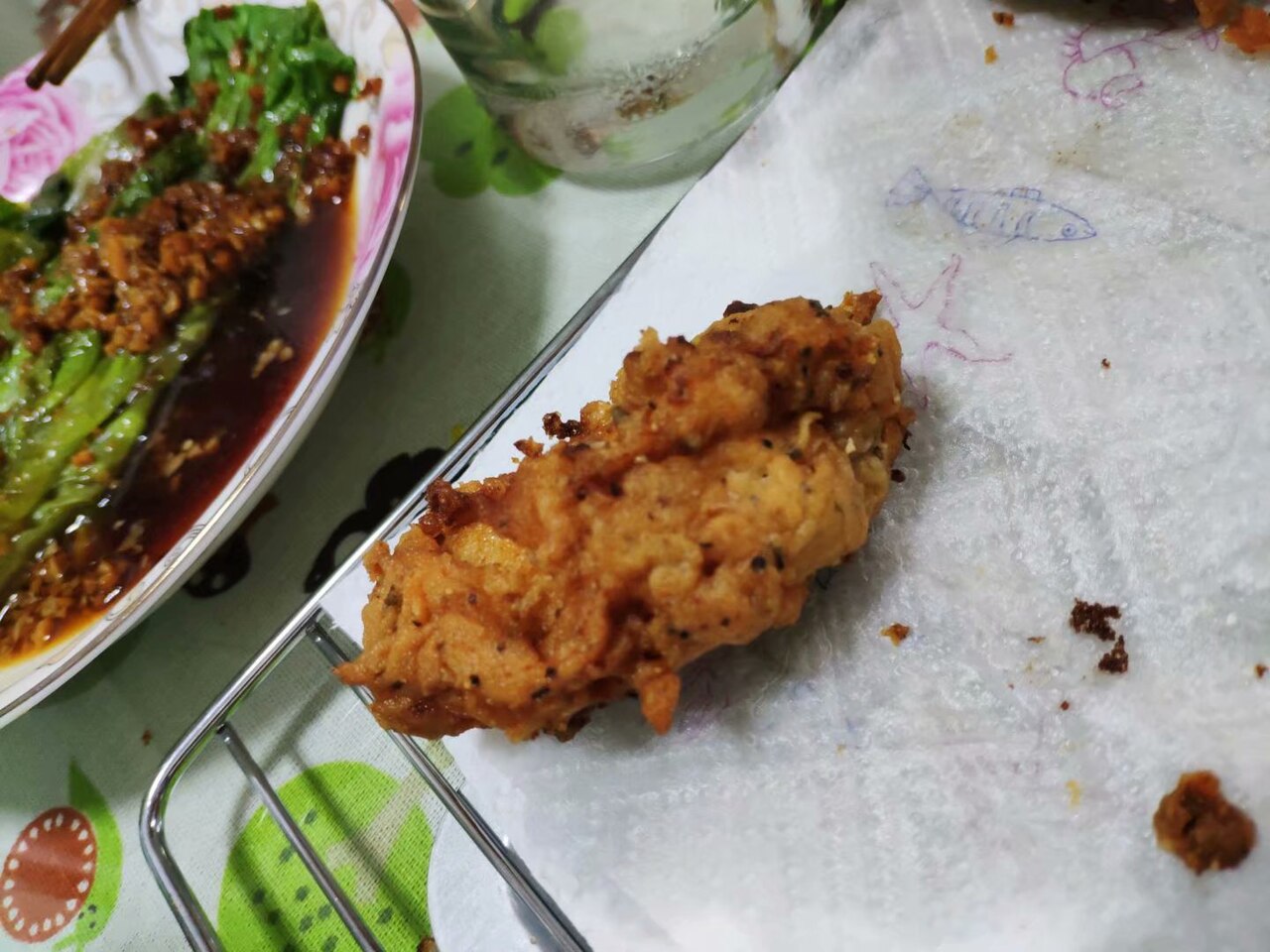
Frying a wing with nothing on it — no batter, no flour, no crumb. The skin browns and crisps on its own, the fat under it renders into the oil, and the sauce goes on afterwards. A Buffalo wing is an unbreaded chicken wing section, deep-fried and then coated or dipped in cayenne sauce and melted butter.
The story Cited · wp-anchor-bar
The Anchor Bar states the rule flatly in its own account: the wings are not grilled, only deep-fried and slightly crispy, and the sauce is added after the wing has been cooked. Traditionally the wings are deep-fried in oil, without breading or flour, until well browned.
Seventy miles east the same bird goes in dredged, and that is the oldest argument in the tradition. John Young's Buffalo wings from 1961 were breaded too — uncut, breaded, deep fried and served in his own tomato-based mumbo sauce — so the bare fry is not even the older Buffalo practice, only the one the city kept.
Inference — the bare fry is a bet on skin. With no coat, everything the eater tastes as crisp is rendered chicken skin, which means the fry temperature and the time have nowhere to hide.
How it is done Cited · wp-buffalo-wing
Dry the pieces. Into hot oil bare, at a high enough heat that water leaving the skin pushes oil away from the surface — foods deep-fried at proper temperatures absorb very little. Fry until well browned and the skin crackles. Drain, then into the bowl with sauce. Sauce goes on after the fryer, never before; sauce in the oil burns and breaks.
Today Tradition
The Buffalo houses hold the line on it, and the National Buffalo Wing Festival's field is built around it. Tradition holds — a shop that fries bare will say so unprompted, and a shop that breads will not call it breading.
The particulars
| kind | coating |
|---|---|
| region | Western New York, The United States |
| confidence | high · updated 2026-09-16 |
Who it runs with
Who talks about it
Where we got it
Where it came from: Cited a source we name · Harvested pulled from an open dataset · Tradition what the tradition says, hedged · Inference this project's reasoning · Field somebody stood there. This record as JSON.