pig artbarbecue postcards
also: linen postcards · Tichnor cards · advertising postcards
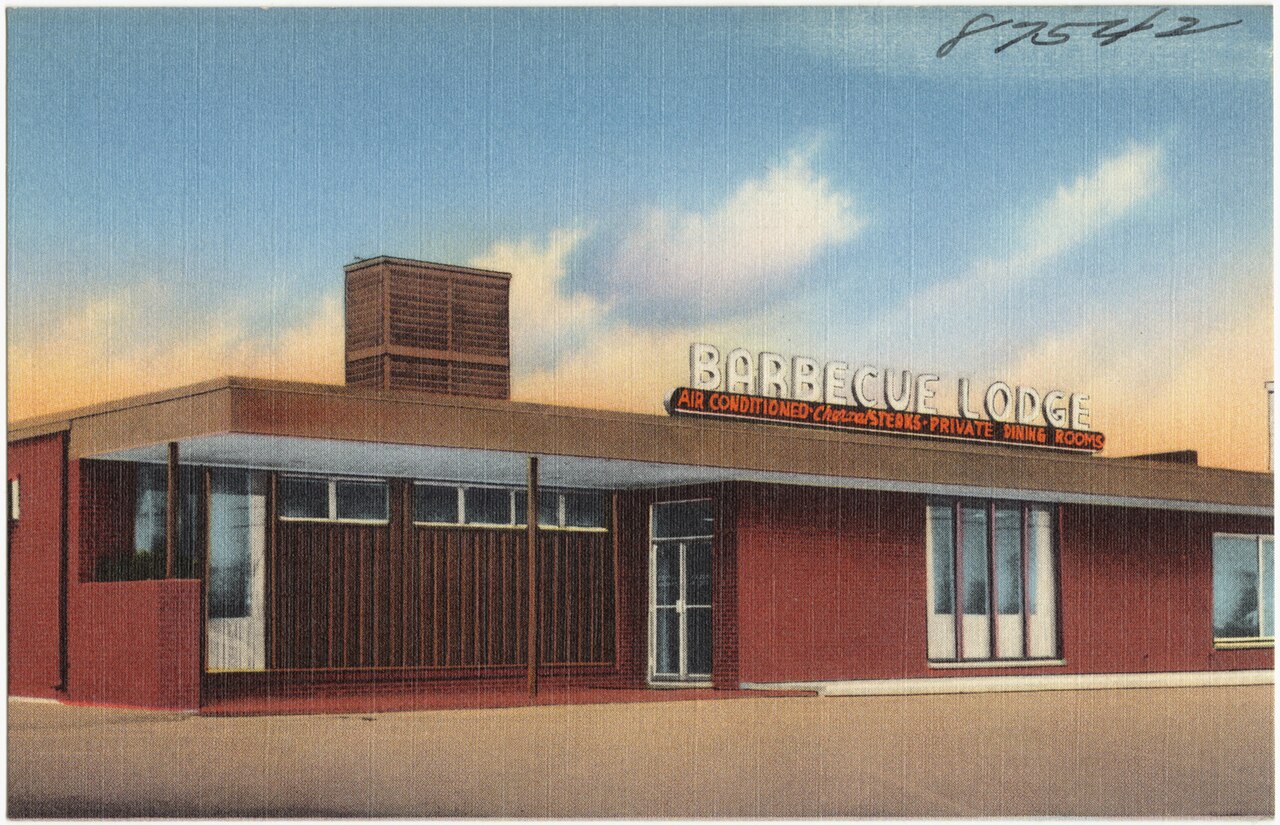
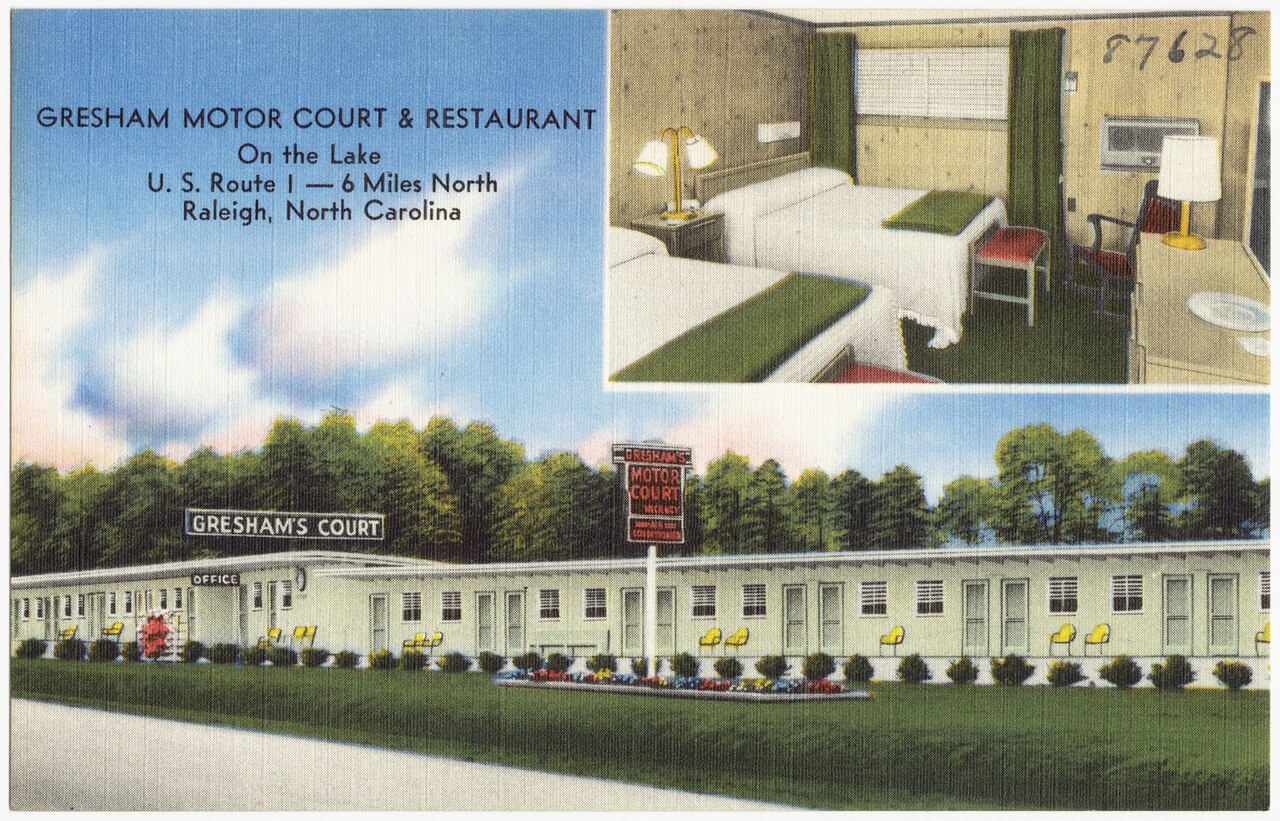
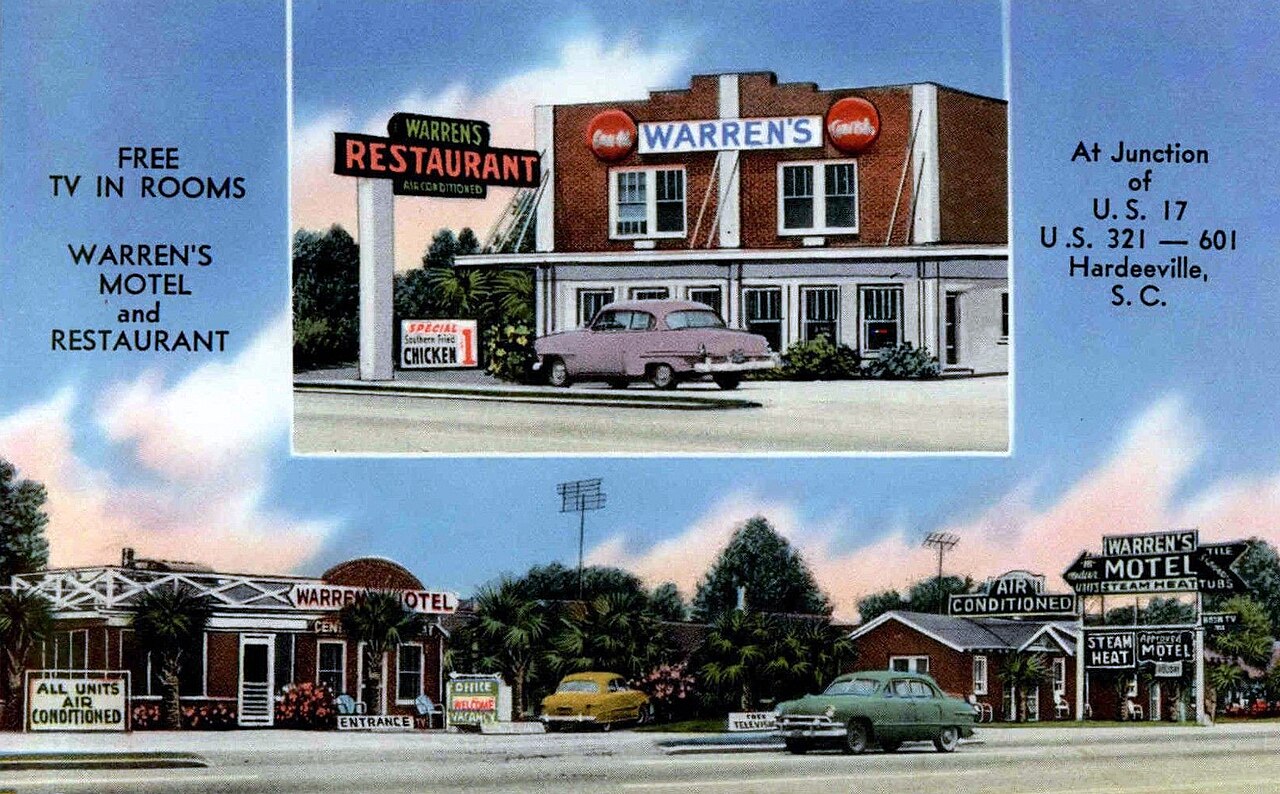
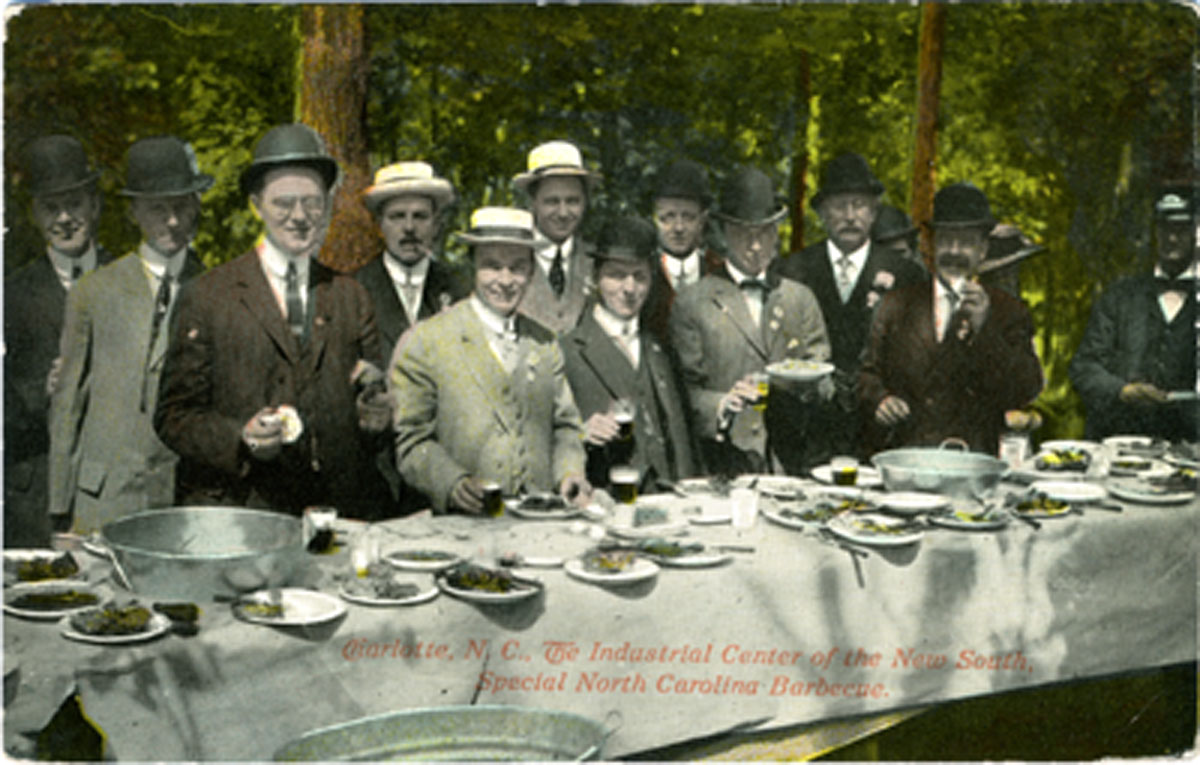
Between about 1930 and 1945 an American restaurant could order its own postcards by the thousand. A printer took a photograph, had an artist colour it by hand, and ran it on paper with a woven texture — the linen card, whose surface takes bright ink and softens a plain building into something worth mailing. Roadside businesses on the highways through both Carolinas bought them and set them by the register. The caption on the back names the route number, because that is how a customer found the place again.
Why a barbecue stand printed postcards
A linen card was cheap advertising that the customer paid to deliver. It carried the name, the highway, the distance from town and a picture of a building that was otherwise unremarkable, and somebody mailed it to Ohio.
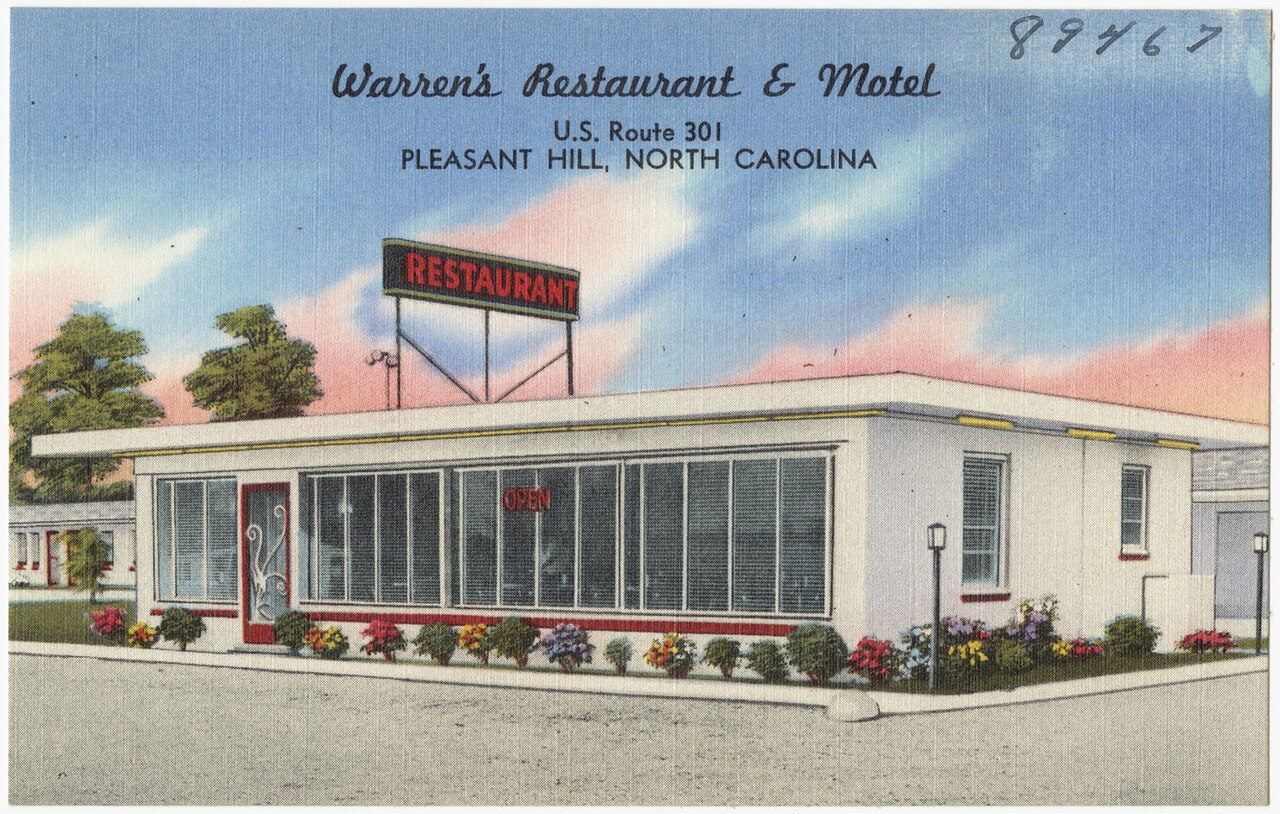
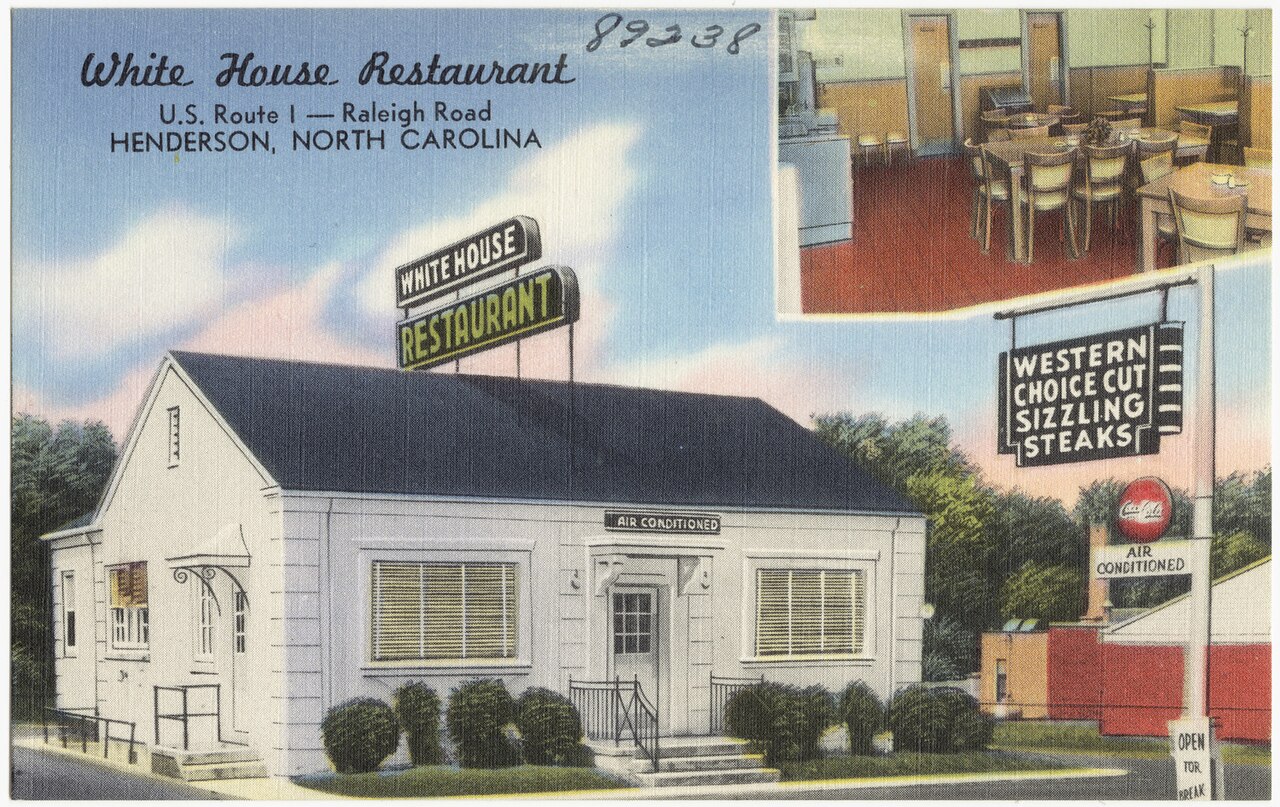
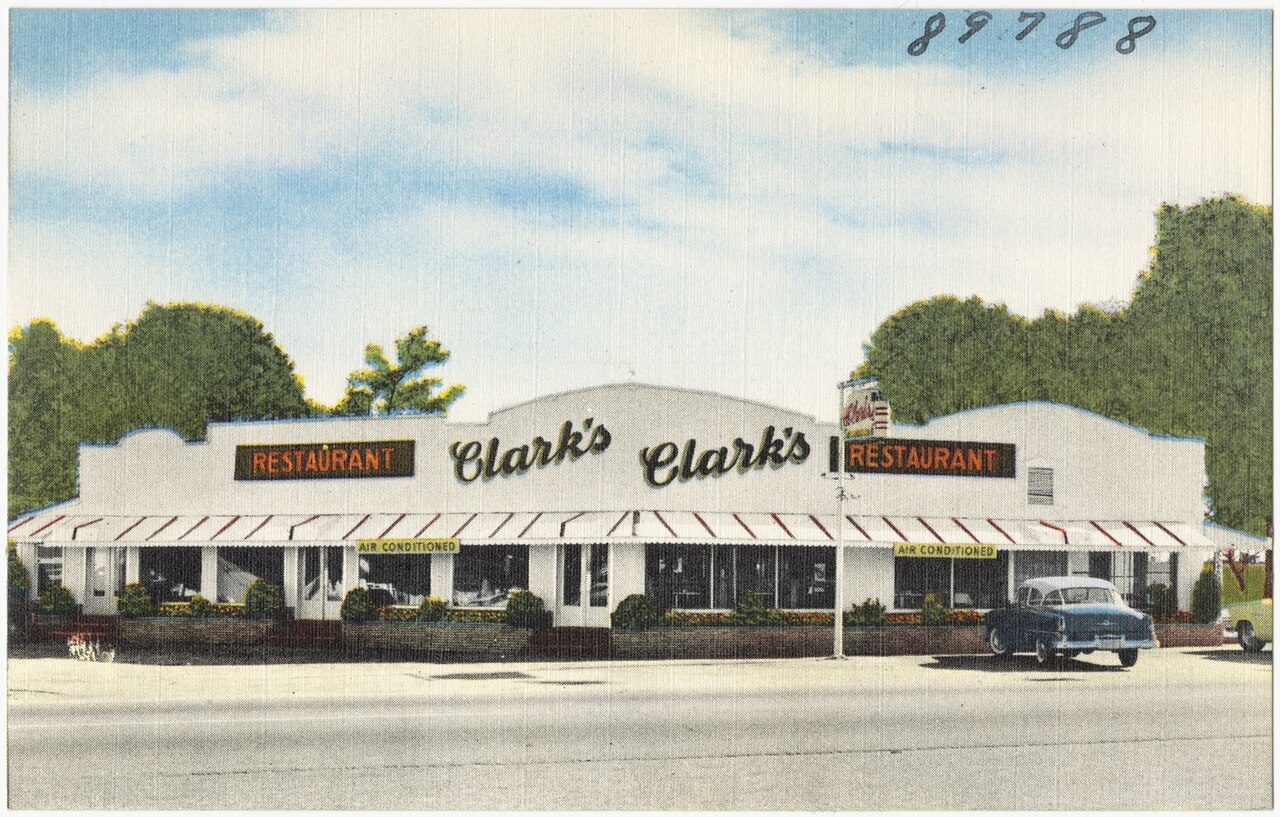
The captions are the useful part. Barbecue Lodge, published by the Carolina News Company of Fayetteville and printed in the 1930s or 1940s, is the Carolina example in the Boston Public Library's Tichnor collection: a low red-brick building with a flat roof and a squat brick chimney, and along the parapet in illuminated letters BARBECUE LODGE, with a red strip beneath it reading AIR CONDITIONED · Charcoal STEAKS · PRIVATE DINING ROOMS. The neighbouring cards in the same file — Warren's Motel & Restaurant on U.S. 301 at Pleasant Hill, the White House Restaurant on U.S. 1 at Henderson, Clark's Restaurant at Santee on U.S. 301, 15 and 15A at the junction with S.C. 6 — show the pattern: the route number is doing the work a street address does now. These are highway businesses and the card is a map.




Tichnor Brothers, and the Boston connection
Most of these were printed a long way from the Carolinas. Tichnor Brothers of Boston turned out linen postcards for the whole country, and the Boston Public Library holds around 25,000 of them, arranged by state and digitised. The library put the scans on Flickr under a licence that allows reuse with credit, which is why a project like this one can print a 1940 North Carolina motor-court card without asking anyone.
Inference — the distance shows. A Boston artist colouring a Fayetteville barbecue lodge from a black-and-white photograph is guessing at the paint, and the skies in these cards are all the same blue. What is reliable in them is the architecture, the signage and the caption; the colour is decoration.
What the Carolina cards do not show
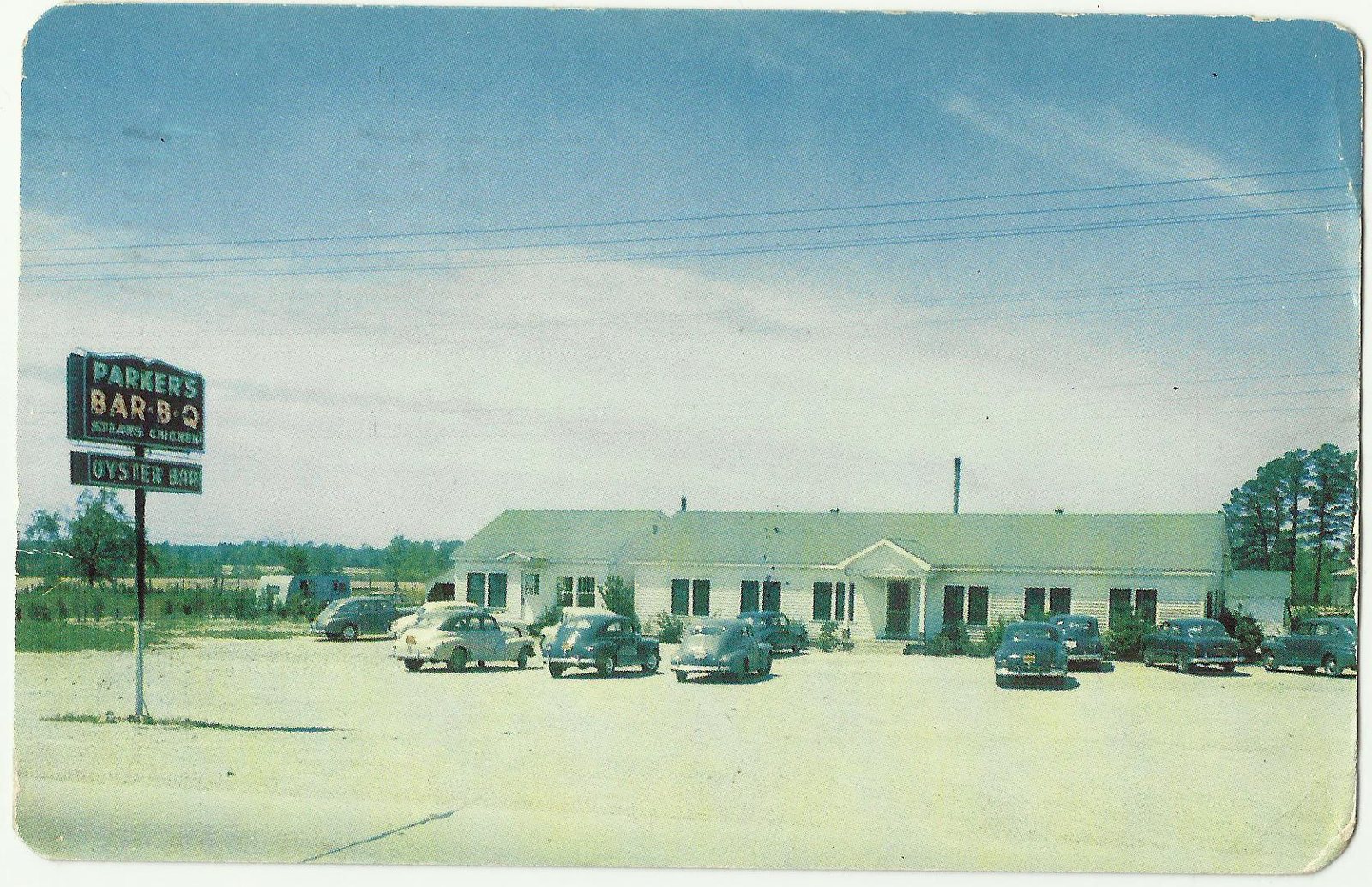
Pits, mostly. The card is a picture of a front elevation with cars parked at it, because that is what the owner wanted photographed: a clean building on a numbered highway, not a cinder-block cookhouse out the back with smoke coming out of it.
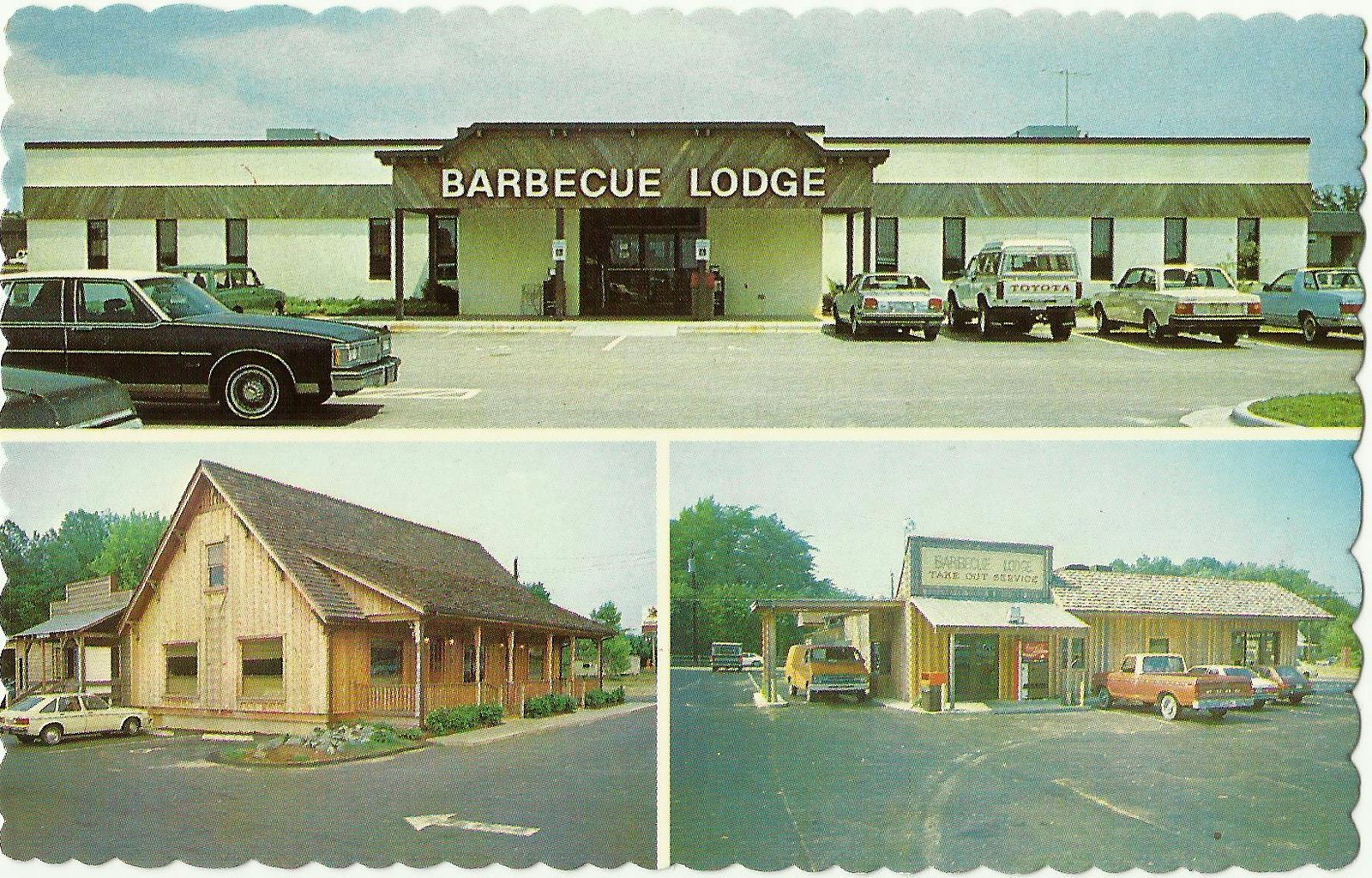
A reader looking for barbecue in this file finds it in the lettering. Barbecue Lodge says so on its face. Elsewhere the word turns up on a panel over a door, or on a board by the road at the edge of the frame, in a card that is nominally about a motel. Tradition holds — barbecue and lodging shared premises all along U.S. 301 and U.S. 1 through the eastern Carolinas in these years, because both were selling to the same car.


Facts
| kind | postcard |
|---|---|
| state | both |
| region | The Carolinas, North Carolina, South Carolina |
| links | Tichnor Brothers Collection — Wikimedia Commons |
| confidence | medium · needs verification · updated 2026-09-16 |
Its kin
Pictures
Sources
- Tichnor Brothers Collection — American postcards, Boston Public Library · link
- Wikimedia Commons · link
- Flickr Commons · link
- State Archives of North Carolina on Flickr Commons · link
- PhC.184 Massengill Postcard Collection · link
- North Carolina Postcards, North Carolina Collection Photographic Archives · link
- UNC Libraries Commons on Flickr Commons · link
Where it came from: Cited a source we name · Harvested pulled from an open dataset · Tradition what the tradition says, hedged · Inference this project's reasoning · Field somebody stood there. This record as JSON.