in the kitchenthe grill
also: grilled wings · over coals · the drum
Grilled wings is a menu category almost everywhere and a fighting word in one city.
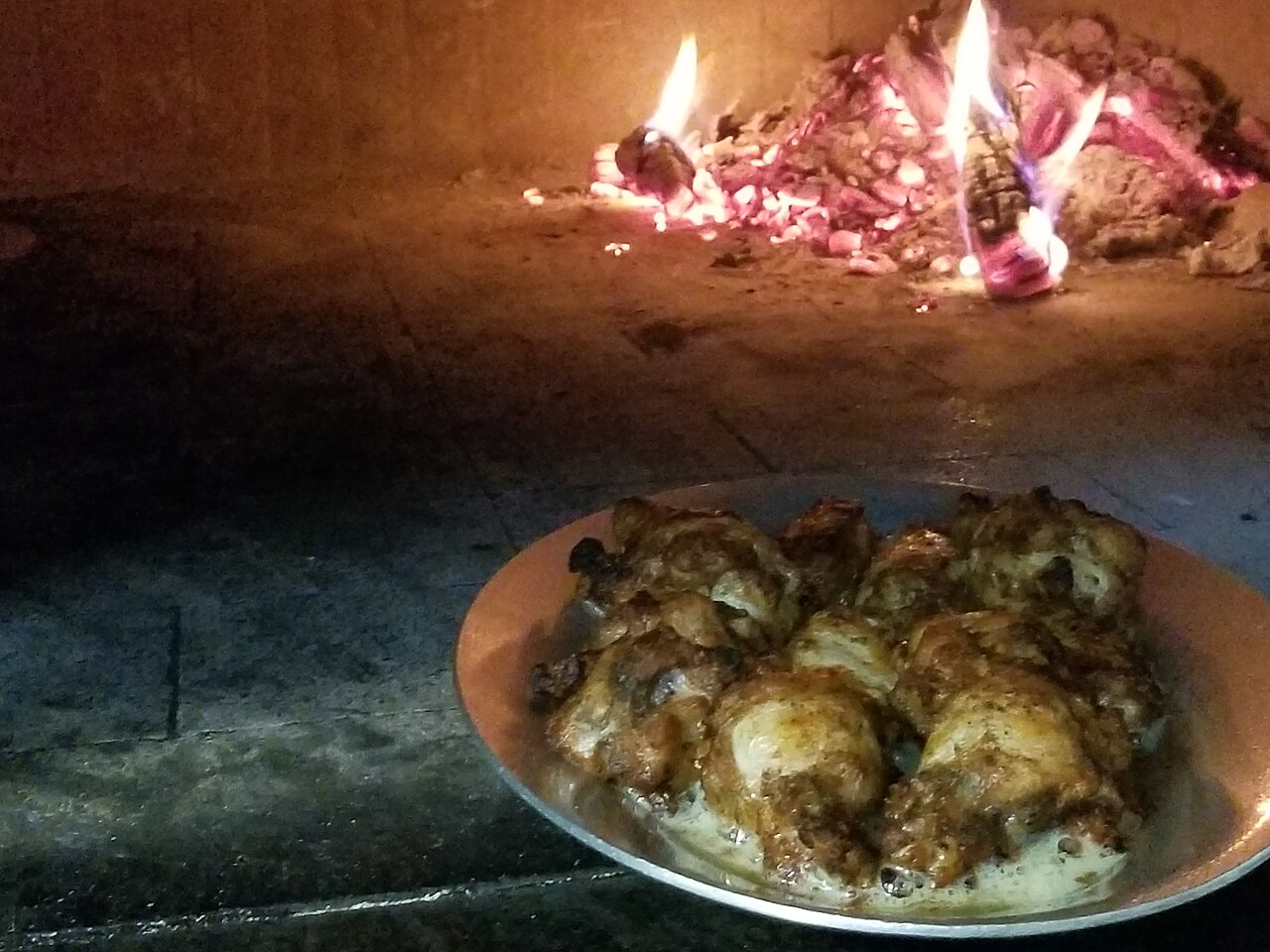
Cooking the wing over direct heat instead of in oil. Buffalo's own reference text lists it among the alternatives — traditionally deep-fried, but alternatively baked, grilled, or broiled — and the Anchor Bar's account rules it out for its own wings: they are not grilled, but only deep-fried and slightly crispy.
The story Cited · wp-jerk-cooking
The Caribbean tradition arrives at the wing from the grill rather than the fryer. Jerked meat was first cooked by the indigenous Taínos; in 1516 the Spanish historian Gonzalo Fernández de Oviedo y Valdés documented them preparing and preserving meat and fish on a barbacoa, seasoned with native hot peppers and pimento. The Taíno term barabicu, framework of sticks, covers a range of wooden structures including a raised grill for roasting and smoking. Spanish colonists adopted the method for the pigs, cattle and chicken they introduced in the 1500s, curing them over pimento wood and berries.
The hardware changed in living memory. Around the 1960s Caribbean vendors looking for a portable method began cutting oil barrels lengthwise, drilling ventilation holes and hinging the lids to hold the smoke; fired with charcoal, those drums are now used across Jamaica. Wood-burning ovens do the job too.
Inference — a wing suits a grill badly and a drum well. Direct flame flares on rendering fat and burns the skin before the joint cooks; a closed drum runs the fire to one side and turns the same fat into smoke.
How it is done Tradition
Two zones, always: fire on one side, wings on the other, lid down. Cook through off the heat, then move over the fire for the last minute to colour. Sugar-bearing sauces go on at the very end or they carbonise. A jerk marinade of allspice and Scotch bonnet goes on before, because it is a marinade rather than a glaze.
Today Tradition
On chain menus as a lighter option and on Caribbean-American counters as the whole point. Tradition holds — a Buffalo house will tell you unprompted that it does not grill, which is the clearest sign that plenty of places do.
The particulars
| kind | heat |
|---|---|
| region | Caribbean America, The United States |
| confidence | high · updated 2026-09-16 |
Who it runs with
Who talks about it
Where we got it
Where it came from: Cited a source we name · Harvested pulled from an open dataset · Tradition what the tradition says, hedged · Inference this project's reasoning · Field somebody stood there. This record as JSON.