a donutGlazed raised
also: raised glazed · yeast glazed · the glazed · plain glazed
Ask for a glazed and nobody asks which kind. It means this one.
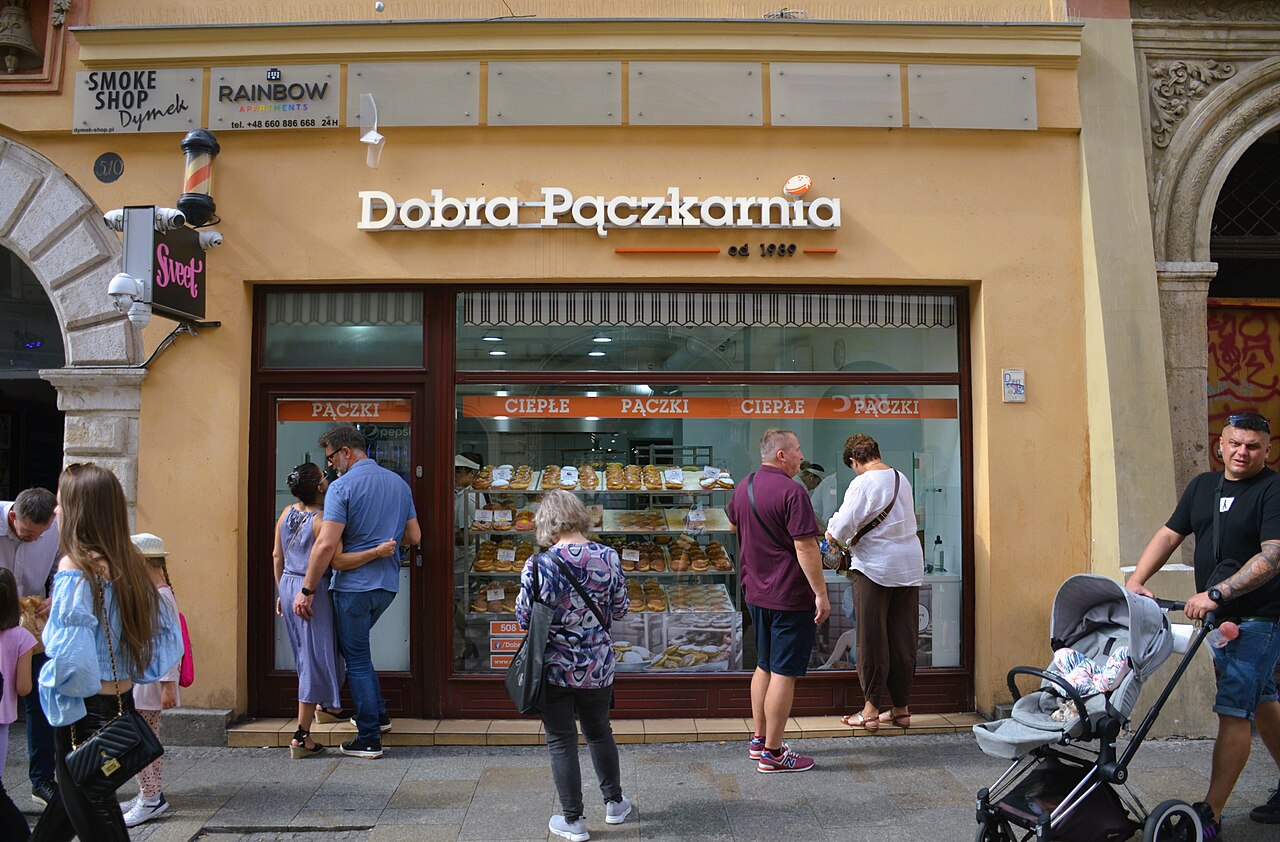
A ring of yeast dough, proofed until it is full of gas, fried about two and a half minutes, then dragged through a thin sugar glaze while it is still hot enough to melt it. The glaze sets into a shell you can hear. Yeast-raised rings run larger and taller than cake rings and average around 38 grams apiece.
The story Cited · wp-doughnut
The raised ring is the older idea and the harder one to run. Dutch settlers brought olykoek — oil cake — to New Amsterdam in the early eighteenth century, balls of sweetened dough fried in hog fat; Washington Irving put them in print in 1809 as "dough-nuts, or oly koeks". The hole arrives in the middle of the nineteenth century, credited by long habit to Hanson Gregory, a New England sailor who said he punched one out with a tin pepper box in 1847 at sixteen because the middles came out raw.
Tradition holds — that the hole was about heat reaching the centre. Culinary historian Linda Civitello writes that the hole made doughnuts cook faster; food writer Michael Krondl reckons the ring shape came off recipes that called for a jumble, a ring-shaped cookie already on the table. By 1870 a cutter with two concentric circles was on sale and the argument stopped mattering to anyone but historians.
When shops automated in the 1920s the raised dough lost ground: it needs time to rise and it is harder to handle, so machinery and baking soda pushed bakers toward cake. The raised ring survived because it is the one people mean.
How it is done Cited · wp-doughnut
Mix a lean, sweet dough with baker's yeast. Let it rise, sheet it, cut rings, then proof the cut rings again in a warm box until they are light enough to float. Fry about 150 seconds at 182 to 190 °C, turning once. Glaze hot: a thin syrup of powdered sugar and water or milk goes on within a minute of the fryer, so it soaks the crust and sets clear.
Today Inference
Every shop in the country sells it and most sell nothing else in that volume. A raised ring goes stale faster than a cake ring, which is why a shop that opened at four in the morning tells you so, and why the tray at noon is not the tray at six.
The particulars
| dough | yeast |
|---|---|
| finish | glazed |
| region | The United States |
| confidence | high · updated 2026-09-16 |
On the label
| what was read | usda |
|---|---|
| pepper or chile | ? |
| vinegar | ? |
| butter or oil | ? |
| tomato | ? |
| sugar | ? |
| soy donut | ? |
| mustard | ? |
| Scoville | nobody publishes one for this donut |
Read from this page, 2026-09-17. USDA SR Legacy 172758, "Doughnuts, yeast-leavened, glazed, enriched (includes honey buns)", published per 100 g and scaled here to the portion USDA itself lists as "doughnut medium (approx 3-3/4" dia)" — 64 g. No ingredient list is published for these generic rows, so the ingredient ranks are null. A shop's own donut is not this donut; this is the closest published measurement of the kind. Every donut measured is on the donut page.
Who it runs with
Who talks about it
Where we got it
- Doughnut — Wikipedia · link
- Cake doughnut — Wikipedia · link
- Doughnut shop — Wikipedia · link
- FoodData Central, SR Legacy — doughnut foods · link
Where it came from: Cited a source we name · Harvested pulled from an open dataset · Tradition what the tradition says, hedged · Inference this project's reasoning · Field somebody stood there. This record as JSON.